
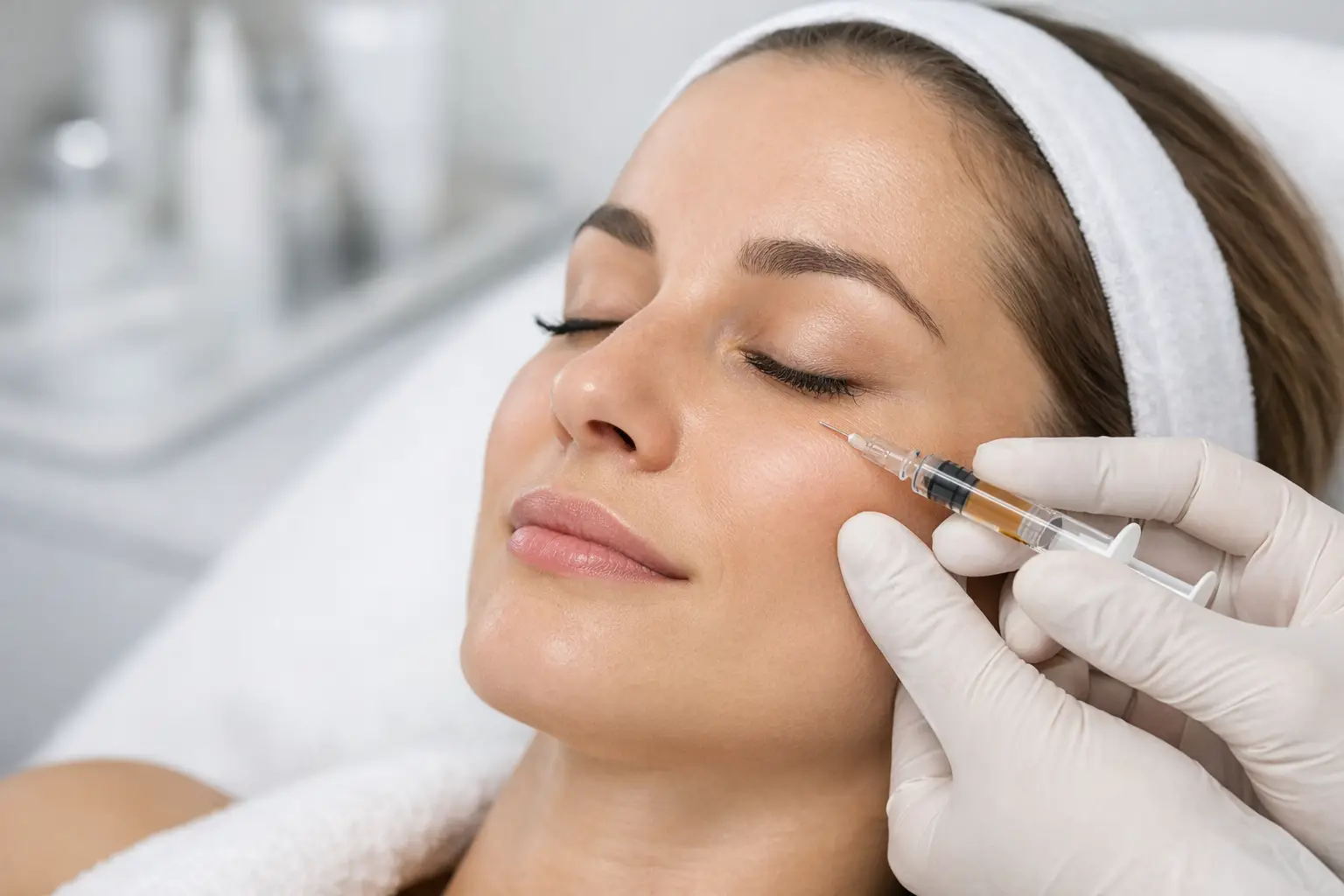
Tired-looking eyes are not always caused by lack of sleep. Fine lines, crepey skin, dehydration and a gradual loss of skin quality can all make the under-eye area appear shadowed or less refreshed, even when you feel well. If you are searching for polynucleotide treatment for under eyes – 07904 727272, it helps to understand what this regenerative treatment can realistically improve, and where a different approach may be more appropriate.
Polynucleotides are often chosen by clients who want the eye area to look healthier, smoother and better supported without adding obvious volume. They are not a replacement for surgery, and they do not work in the same way as dermal filler. Their role is to support skin repair and quality gradually, with natural-looking change over a course of treatment.
What is polynucleotide treatment for under eyes?
Polynucleotides are purified DNA fragments used in regenerative aesthetic treatments. When carefully placed in suitable areas of the face, they are intended to support the skin’s natural repair processes. They can encourage fibroblast activity, help improve hydration and elasticity, and support the production of collagen and elastin over time.
The under-eye area is especially delicate. Its skin is thinner than most other facial areas and is often one of the first places to show fine lines, dryness and changes in texture. Polynucleotides are used here to improve the quality of the skin itself rather than to create volume beneath it.
This distinction matters. A client with thin, crepey under-eye skin may benefit from a regenerative approach, while someone whose main concern is a deep hollow or pronounced tear trough may need a discussion about other options. A thorough consultation should always come before a recommendation.
What concerns can it help with?
Polynucleotide treatment can be a considered option for early to moderate signs of skin ageing around the eyes. Clients often seek it when concealer settles into fine lines, the area looks dehydrated, or the skin appears less firm than it once did.
It may help improve the appearance of fine lines, delicate crepiness, mild laxity and dull-looking skin around the eyes. Some clients also find that the area looks more hydrated and rested as the quality of the skin improves.
However, treatment has limits. Polynucleotides cannot remove significant excess skin, correct a strong structural hollow, or fully resolve dark circles caused by genetics, deep pigmentation or visible blood vessels. Under-eye darkness has several possible causes, which is why an honest assessment is more valuable than a one-size-fits-all treatment plan.
Polynucleotides versus tear trough filler
Tear trough filler is designed to replace volume in carefully selected clients. Polynucleotides are designed to support the skin. Neither option is automatically better, and the wrong treatment in the wrong under-eye can lead to disappointing results.
For example, filler may not be suitable where there is puffiness, fluid retention, very thin skin or a tendency towards under-eye bags. In these cases, improving skin quality without adding volume can be the more conservative route. Equally, if volume loss is the primary issue, polynucleotides alone may offer only a modest improvement in the shadowing.
A practitioner should assess your skin thickness, facial anatomy, existing puffiness, pigmentation, lifestyle and previous injectable history before advising you. The aim is not simply to treat a line or shadow in isolation, but to keep the whole eye area looking balanced.
What happens during treatment?
Your appointment begins with a consultation. This is the time to discuss what concerns you most, any previous treatments, your medical history, allergies, medications and the result you would like to achieve. Clear photographs may also be taken to support treatment planning and help you assess gradual changes fairly.
Once suitability has been confirmed, the skin is cleansed and prepared. A topical numbing cream may be used where appropriate. The polynucleotide product is then placed in small, precise amounts across the agreed area using an appropriate technique. Under-eye treatment needs a careful, measured approach because the tissues are delicate and individual anatomy varies.
The appointment itself is usually straightforward, although you should allow time for consultation, consent and aftercare advice. London Essex Aesthetics provides treatment in the privacy of your home or preferred location, without compromising the clinical checks, hygiene standards or professional discussion that should form part of any injectable appointment.
How many sessions are usually needed?
Polynucleotide treatment is generally planned as a course rather than a single appointment. Many clients are advised to have two or three sessions, usually spaced a few weeks apart, followed by maintenance according to their skin, response and goals.
Changes are gradual. Some people notice a fresher appearance and improved hydration relatively early, but collagen-supporting processes take time. It may take several weeks after the course for the result to become more apparent, and outcomes vary between individuals.
This slower progression is often exactly what appeals to clients who want a subtle result. Friends may notice that you look well, rather than immediately identifying that you have had an aesthetic treatment.
Recovery and aftercare
Downtime is usually limited, but the under-eye area can bruise or swell more easily than other areas. Small raised injection points, redness, tenderness and mild puffiness are common short-term effects. These normally settle, though bruising can last longer for some clients.
For the first 24 hours, it is sensible to avoid touching the area unnecessarily, strenuous exercise, alcohol, intense heat and make-up directly over injection points. Avoid facials, chemical peels, microneedling and other active skin treatments until your practitioner confirms it is appropriate to resume them.
A cool compress can be helpful for swelling, provided it is clean and not pressed firmly onto the skin. Follow the personalised aftercare you are given, as advice may differ depending on the treatment technique and your individual circumstances.
If you experience increasing pain, marked heat, spreading redness, unusual discolouration, a significant reaction or any symptom that concerns you, contact your practitioner promptly for advice. Good aftercare is not an afterthought – it is part of safe treatment.
Who may not be suitable?
Suitability depends on your health, medical history and the condition of the skin on the day. Treatment is normally postponed if you have an active skin infection, cold sore outbreak, significant inflammation or are feeling unwell.
Polynucleotide products can vary, including their source materials, so known allergies must be discussed carefully. Pregnancy and breastfeeding, autoimmune conditions, blood-clotting concerns, certain medicines and recent treatments around the eyes should also be raised during consultation. A responsible practitioner will advise if it is safer to delay treatment, seek medical guidance or choose an alternative.
It is also important to have realistic expectations. If the concern is predominantly under-eye bags, pronounced hollowness or hereditary dark circles, a consultation may identify that polynucleotides are only one part of the answer, or not the right treatment at all.
Choosing a careful approach to the eye area
The best under-eye treatments are rarely about making a dramatic change in one visit. They are about respecting delicate anatomy, choosing a treatment for the correct concern and allowing enough time for the skin to respond.
Polynucleotides can be an excellent option for clients who want to invest in stronger-looking, more hydrated and refined under-eye skin. A personalised consultation will establish whether they fit your concerns and, just as importantly, whether a more suitable route should be considered. The most reassuring result is one that still looks like you – simply more rested.