
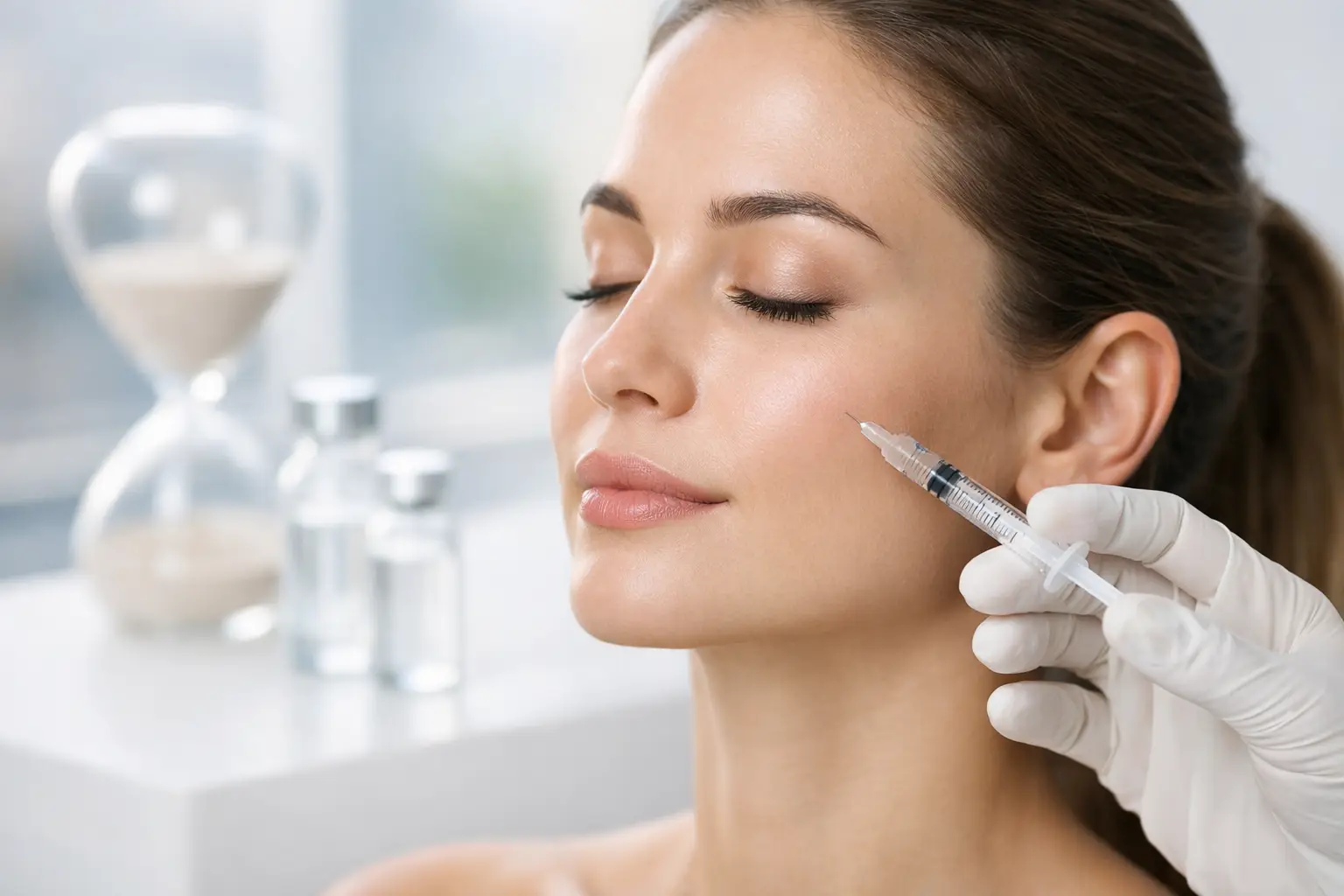
A glowing result should look like healthier skin, not a different face. If you are asking, “how long do skin boosters last?”, London Essex Aesthetics can talk you through the answer in relation to your skin, goals and chosen product. For most clients, the visible benefits build gradually and commonly last around six to nine months after a recommended initial course, but this is not a fixed promise for every person.
Skin boosters are designed to improve hydration, softness, luminosity and fine skin texture. They are a popular choice when the skin looks tired, crepey or less reflective, yet you do not want the structural change associated with dermal filler. The best timing for a top-up depends on how your skin responds, your lifestyle and whether you are treating the face, neck, décolletage or hands.
How long do skin boosters last in practice?
Most hyaluronic acid skin booster treatments are planned as an initial course of two or three sessions, usually spaced a few weeks apart. This staged approach gives the skin time to respond and allows hydration and quality to improve progressively. Some clients notice a fresher look after the first appointment, while the fuller benefit is more apparent after the course is complete.
After that, many people choose a maintenance treatment at approximately six to nine months. Depending on the product used, the condition of your skin and the treatment area, results may begin to soften earlier or remain noticeable for longer. A careful consultation is the right place to discuss a realistic maintenance plan rather than booking repeated treatments on a set schedule.
It also helps to distinguish skin boosters from filler. Filler is generally placed to restore or enhance structure, such as cheek support or lip shape. A skin booster is placed more superficially to support hydration and skin quality. It can make fine lines appear less pronounced where dehydration is contributing to their appearance, but it will not replace lost volume or correct deeper folds in the same way as a structural treatment.
Why results vary from one person to another
There is no single duration that applies to every treatment because skin is living tissue. Age, baseline hydration, sun exposure, smoking, stress, hormonal changes and general health can all influence how long the improvement remains visible. Skin that is very dehydrated or sun-damaged may need a more considered initial plan before it reaches the level of smoothness a client hopes for.
Product selection matters too. Different skin boosters have different formulations, concentrations and intended treatment protocols. The area being treated is equally relevant. The delicate skin around the eyes may need a different approach from the cheeks, while the neck and hands can be affected by frequent movement, weather exposure and daily washing.
Your skincare routine can support the quality of your result, although it cannot make an injectable treatment permanent. Daily SPF, gentle cleansing, an appropriate moisturiser and active products chosen for your skin can help protect the surface of the skin between appointments. A practitioner may also discuss whether treatments such as microneedling, chemical peels, polynucleotides or PRP would complement your concerns. These are not interchangeable treatments, and combining them should always be purposeful rather than excessive.
A natural-looking treatment has its own timeline
The gradual nature of skin boosters is one of their advantages. There is no expectation of an instant, dramatic change. Instead, clients often describe their skin as looking more rested, better hydrated or easier to apply make-up to. Friends may notice that you look well without being able to identify why.
That subtlety does require patience. Booking a skin booster immediately before a major event may not give enough time for the planned course, settling period or the occasional bruise to resolve. If you have a wedding, holiday or important photographs ahead, it is sensible to arrange a consultation well in advance.
What happens after a skin booster appointment?
Small raised points, mild redness, tenderness or swelling can occur after treatment. These effects are usually temporary, but they can be more noticeable in certain areas and vary between clients. A qualified practitioner should explain expected downtime, aftercare and the signs that warrant prompt advice before you proceed.
For the first 24 hours, you will usually be advised to keep the area clean, avoid touching or pressing it unnecessarily, and avoid make-up unless your practitioner confirms it is suitable. Intense exercise, alcohol, heat exposure and saunas are commonly best avoided for a short period because they may increase redness or swelling. Avoid facial massage and do not book another facial treatment until you have been given clear guidance.
Do not try to judge the final result on the same day. Temporary swelling can make the skin look plumper at first, then settle. The treatment’s intended benefit develops over the following days and weeks. Taking photographs in consistent natural light before treatment and at review points can be more useful than relying on day-to-day mirror checks.
Is it time for a top-up?
A maintenance appointment may be worth considering when the hydrated, smooth appearance you enjoyed after your course begins to fade and your skin again feels dry or looks less radiant. The right interval is based on your outcome, not on pressure to keep treating.
At a review, your practitioner should assess whether another skin booster is appropriate or whether a different treatment would better address your current concern. For example, a concern caused mainly by laxity, volume loss, pronounced pigmentation or deep lines may not be best managed by simply repeating a hydration-focused treatment. Honest advice is central to achieving balanced results and avoiding unnecessary procedures.
Safety comes before convenience
A mobile appointment can be private and practical, particularly for clients with demanding schedules or family commitments, but the clinical standards should remain the same as they would in a treatment setting. Your consultation should cover your medical history, allergies, current medicines, previous aesthetic treatments, skin condition and expectations. You should understand the product being used, who is administering it, likely side effects, aftercare and how to seek support should you need it.
Skin boosters are not suitable for everyone at every time. Treatment may need to be postponed if you are unwell, have an active skin infection or inflammation in the proposed area, or if other health factors make treatment inappropriate. Pregnancy and breastfeeding, certain medicines and a history of particular reactions should be discussed openly during consultation. Never feel rushed into proceeding if you have unanswered questions.
For clients across London and Essex, London Essex Aesthetics provides consultation-led care in the comfort and discretion of your preferred location. The aim is not to create a treatment plan from a trend or a photograph, but to understand what your skin needs and what a refined result means to you.
Skin boosters can be an excellent investment in skin quality when expectations are realistic and the treatment is timed well. A personalised consultation gives you the clearest answer on how long your own results are likely to last, along with a plan that respects your skin, your diary and your preference for natural-looking change.