
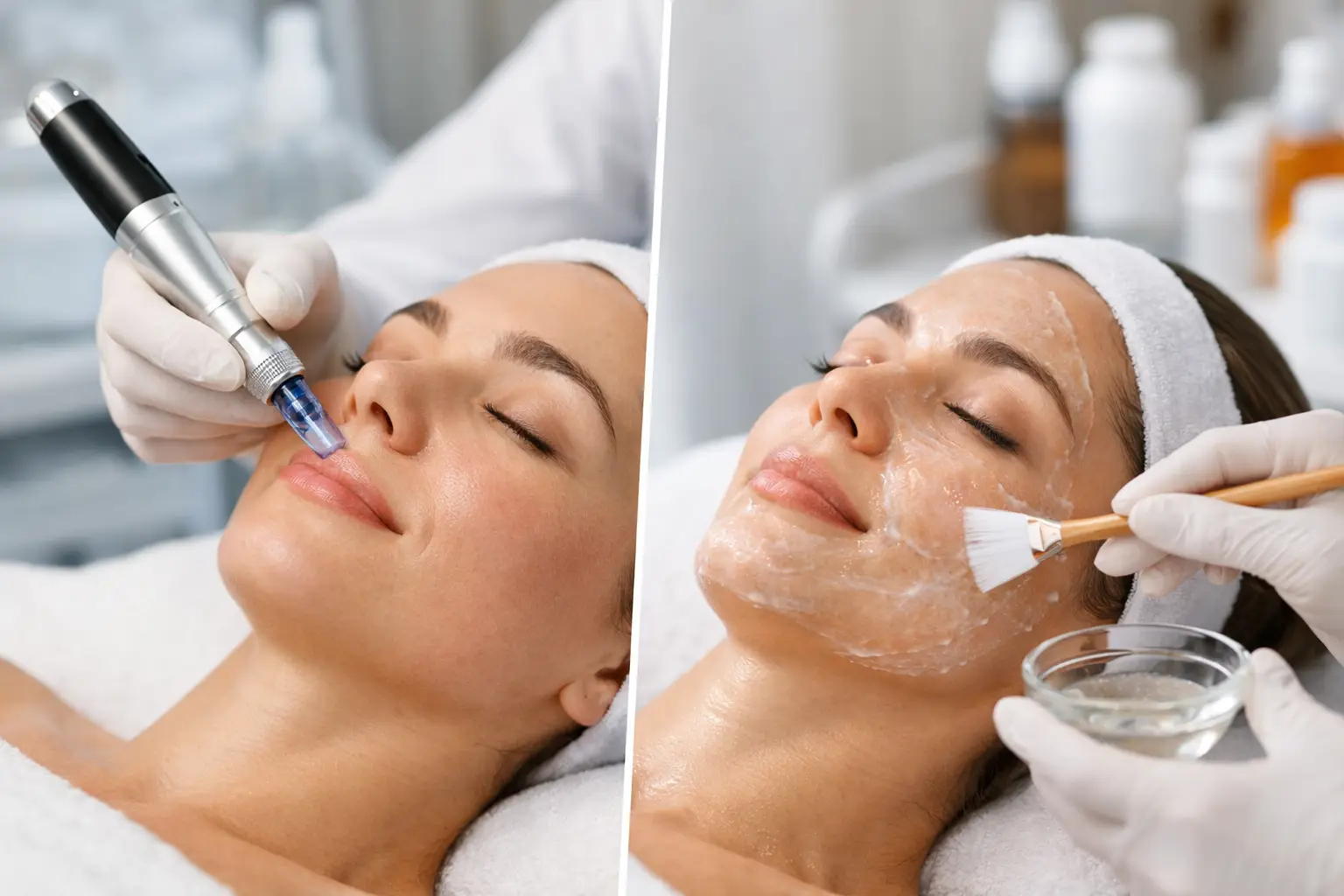
A rougher texture that shows beneath make-up, lingering acne marks, pigmentation or a complexion that has lost its brightness can each call for a different approach. When comparing microneedling vs chemical peels in London and Essex, call 07904 727272 for a consultation-led recommendation rather than choosing treatment from a trend or a single before-and-after image. Both treatments can refresh the skin, but they work in very different ways and suit different concerns, skin types and timelines.
Microneedling vs chemical peels: the essential difference
Microneedling is a controlled treatment that uses fine, sterile needles to create tiny microchannels in the skin. This stimulates the body’s natural repair response and supports the production of collagen and elastin – the proteins associated with skin firmness, bounce and smoother texture. It is often selected for concerns beneath the surface, such as acne scarring, enlarged pores, fine lines and uneven texture.
A chemical peel applies a carefully chosen exfoliating solution to the skin. The solution encourages the shedding of damaged, dull surface cells and supports renewed skin turnover. Depending on the type and strength of peel, it can be particularly helpful for congestion, superficial pigmentation, dullness, uneven tone and some forms of active breakouts.
In simple terms, microneedling encourages structural renewal from within, while a chemical peel focuses more directly on skin renewal at the surface. There is overlap, but they are not interchangeable treatments.
When microneedling may be the better choice
Microneedling is commonly recommended when the priority is improving skin texture and encouraging gradual collagen renewal. It can be used on the face and, following an appropriate assessment, other areas affected by textural scarring or signs of skin ageing.
For clients concerned by indented acne scars, fine crepiness, visible pores or early loss of firmness, a course of microneedling may offer a more relevant route than repeated exfoliation alone. Results develop gradually because collagen remodelling takes time. This is a benefit for people seeking discreet, natural-looking improvement, but it also means patience is required.
Following treatment, the skin is usually pink or red and may feel warm or tight, similar to mild sun exposure. This commonly settles within 24 to 72 hours, although recovery varies. Skin can feel dry or lightly flaky as it settles. Most people need a series of treatments, spaced several weeks apart, to achieve meaningful improvement in texture or scarring.
Microneedling is not usually performed over active infection, inflamed acne, open skin, certain active skin conditions or areas prone to problematic scarring. Your practitioner should also ask about medication, skincare, recent treatments and your health history before proceeding.
What microneedling does not do
Microneedling should not be presented as an instant solution for deep scars, pronounced laxity or significant volume loss. These concerns may require a different treatment plan, or a combination approach planned carefully over time. Honest assessment matters, especially where expectations have been shaped by heavily edited imagery online.
When a chemical peel may be the better choice
Chemical peels can be an excellent option when skin looks tired, congested or uneven and the main concern sits closer to the surface. A professionally selected peel may improve radiance, refine the appearance of pores, support clearer-looking skin and help address superficial pigmentation.
Not all peels are alike. Superficial peels tend to involve little downtime and can suit clients who want a refreshed appearance with minimal disruption to work or family life. Medium-depth options can create more noticeable peeling and require greater commitment to aftercare. The right choice depends on the formula, skin condition, previous treatments and the outcome you want to achieve.
Some clients see light flaking after a peel; others peel more visibly. It is tempting to pick at loose skin, but this can irritate the area and interfere with recovery. Skin should be treated gently, kept well moisturised with suitable products and protected from UV exposure.
A peel may not be appropriate if the skin barrier is compromised, there is active irritation or infection, or you are using products or medication that increase sensitivity. Certain skin tones and pigmentation concerns also require particular care. An experienced practitioner will assess the risk of post-inflammatory pigmentation and choose a conservative, suitable protocol where appropriate.
Downtime, comfort and timing
The practical difference often comes down to your diary. Microneedling can leave temporary redness, while a peel may cause flaking that is harder to conceal during the following days. Neither is automatically the ‘easier’ treatment; it depends on how your skin responds and whether you have an event, holiday or important meeting approaching.
Do not book either treatment immediately before an occasion where you need your skin to look completely settled. Allow time for recovery, especially if it is your first treatment. Your practitioner can help you choose a sensible date and explain what is realistic for your skin.
During microneedling, comfort is managed with an appropriate technique and, where suitable, topical numbing. A chemical peel can feel tingly, warm or mildly prickly while it is applied. Both should be performed with clear guidance throughout, not rushed through as a routine appointment.
Can microneedling and chemical peels be combined?
They can be part of the same long-term skin plan, but they should not simply be layered together because both are popular. For example, a client may begin with a peel programme to address congestion and dullness, then move to microneedling once the skin is calmer to focus on acne scarring and texture. Another person may have occasional superficial peels between microneedling sessions, with adequate spacing and only when the skin barrier is healthy.
The sequence, interval and intensity must be tailored. Combining treatments too closely can lead to unnecessary inflammation, prolonged sensitivity and a compromised barrier – the opposite of the healthy, balanced skin you are trying to support.
Your consultation should guide the decision
A good consultation looks beyond a single concern. It considers your skin type, sensitivity, pigmentation history, acne activity, current skincare, lifestyle, medical history and tolerance for downtime. It should also cover whether you are pregnant or breastfeeding, as treatment suitability can change.
At London Essex Aesthetics, the treatment plan is shaped around these details and delivered with the privacy and convenience of a mobile service across London and Essex. A familiar setting can make it easier to discuss concerns openly, but clinical standards, hygiene, consent and aftercare remain central to every appointment.
Before treatment, avoid introducing new active skincare products without advice. After either procedure, keep the routine simple. Avoid excessive heat, strenuous exercise, swimming pools, exfoliating acids, retinoids and direct sun exposure for the period advised by your practitioner. Daily broad-spectrum SPF is essential, particularly when treating pigmentation or undergoing any treatment that increases skin sensitivity.
Choosing the treatment that fits your skin
Choose microneedling when texture, acne scarring, pores or gradual collagen support are your main priorities. Consider a chemical peel when dullness, congestion, superficial discolouration or uneven tone are more pressing. If you have several concerns, the best answer may be neither treatment in isolation, but a staged plan that respects your skin’s recovery time.
The most useful next step is not to decide based on downtime alone. Arrange a professional assessment, be clear about the result you want and give your skin the time it needs to respond well. Subtle, well-planned progress is always more valuable than pushing for a quick change.