
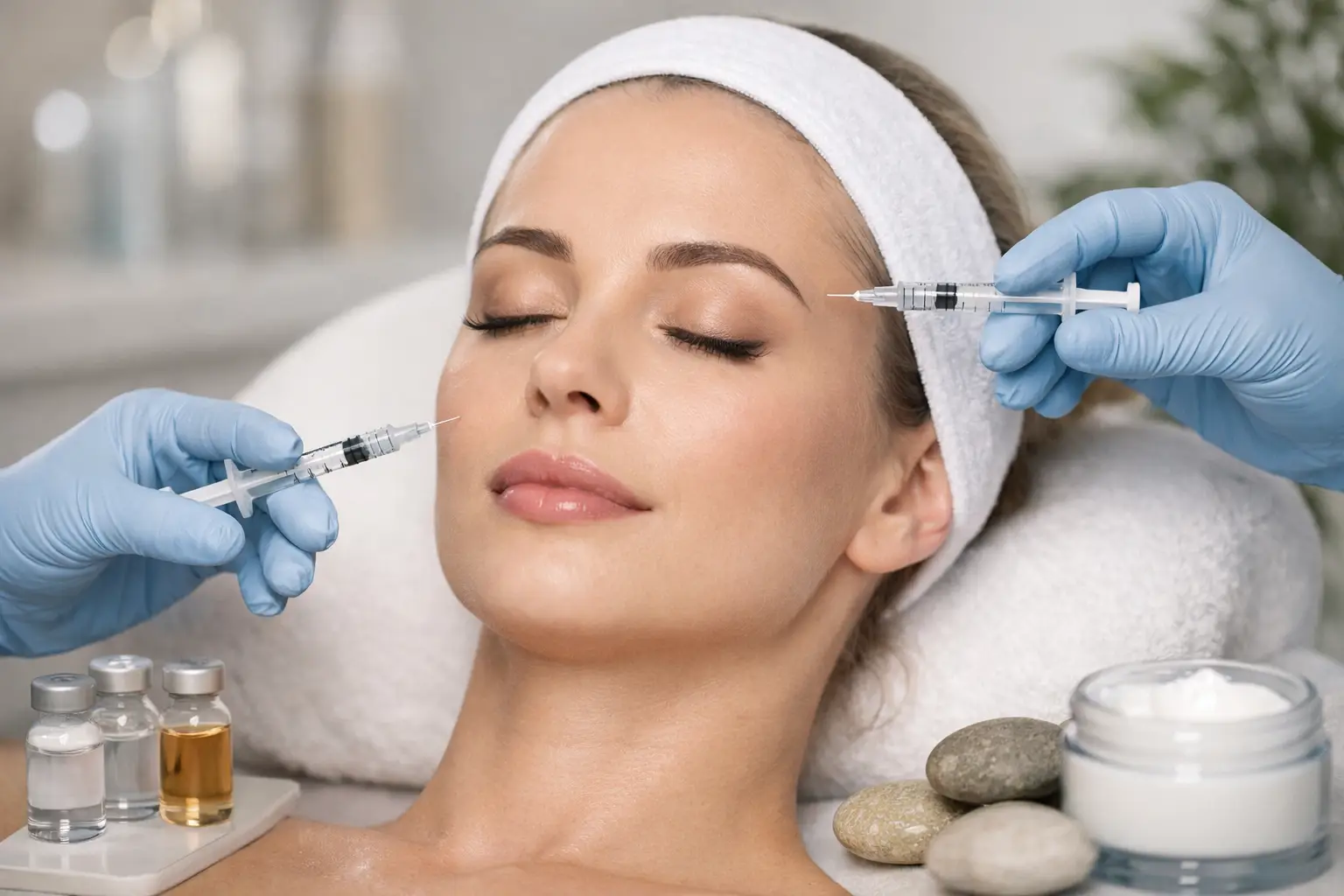
A smoother forehead and a fresher-looking face can sound like the same goal, but they are not always achieved with the same treatment. In aesthetics Romford fillers and anti-wrinkle explained properly means understanding that one treatment softens movement-related lines, while the other replaces lost structure or volume. Knowing the difference matters because the best results usually come from choosing the right treatment for the right concern, not simply booking what sounds familiar.
Many clients come to consultation with a clear outcome in mind but are unsure which option will actually get them there. That is completely normal. The words are often used interchangeably, yet anti-wrinkle treatment and dermal filler work in very different ways, suit different areas, and carry different expectations for results and maintenance.
Aesthetics Romford Fillers and Anti-Wrinkle Explained
Anti-wrinkle treatment is designed to reduce the appearance of lines caused by repeated facial movement. Think forehead lines, frown lines between the brows, and crow’s feet. These lines develop because the underlying muscles contract every day when you smile, squint, frown or raise your eyebrows. By relaxing targeted muscles, anti-wrinkle treatment allows the skin above them to look smoother and more rested.
Dermal fillers do something else entirely. They are used to restore volume, support facial contours, and improve balance in areas where tissue has thinned or shifted over time. Fillers may be used in the lips, cheeks, chin, jawline, nasolabial folds, marionette lines and tear trough area, depending on the person and the clinical assessment. Rather than reducing muscle movement, they add structure where support has been lost or where shape needs refinement.
This distinction is the first thing to get right. If a line is caused mainly by muscle movement, filler may not be the best starting point. If a concern is caused by volume loss or hollowing, anti-wrinkle treatment alone is unlikely to create the change you want.
What anti-wrinkle treatment is best for
Anti-wrinkle treatment tends to work best on dynamic lines. These are the lines that appear when your face moves and can become more visible over time if they start to sit in the skin at rest. The aim is not to make the face look frozen. Done well, treatment should soften strong muscle pull while preserving natural expression.
This is why dosage, placement and muscle assessment matter so much. Two people may both want help with forehead lines, but one may have a stronger brow muscle pattern, different skin quality, or a naturally lower brow position. Treating both in exactly the same way would not be appropriate. A careful plan is what keeps results balanced and avoids a heavy or unnatural appearance.
Results are not immediate. It typically takes several days to begin noticing a change, with the full effect seen after around two weeks. The result is temporary and usually maintained with repeat treatment at suitable intervals, depending on the individual.
What fillers are best for
Dermal fillers are usually chosen when the concern relates to shape, contour or volume. Ageing affects more than the skin surface. Fat pads can shrink, bone structure changes, and skin support reduces. This is why the face can start to look tired or less defined even if the skin is still in relatively good condition.
Fillers can restore proportion in a subtle way. In the cheeks, they may provide lift and support. In the lips, they can improve hydration, border definition or symmetry rather than simply adding size. Along the jawline or chin, they can help create cleaner structure. In lower-face lines, they may soften shadowing if volume loss is a contributing factor.
The key point is that filler should be led by anatomy, not trends. More product is not better. In many cases, conservative treatment gives the most elegant result because it respects the natural features of the face rather than trying to transform them.
Fillers or anti-wrinkle treatment – which do you need?
It depends on what is causing the concern. If you are bothered by lines that deepen when you frown or raise your eyebrows, anti-wrinkle treatment may be the better option. If your concern is flatness in the cheeks, loss of lip definition, or a more hollow or tired appearance, filler may be more suitable.
Sometimes the answer is both, but not always at the same appointment and not always in large amounts. For example, someone may have forehead movement lines and mild mid-face volume loss. Another person may feel that their mouth area looks drawn because cheek support has reduced, even though they assume they need filler directly into the lines. A thorough assessment often changes the treatment plan.
This is where honest consultation matters. A responsible practitioner should explain not only what can be treated, but also what should be left alone, what may need a staged approach, and when another treatment might be more appropriate.
What a good consultation should cover
A proper consultation is not a formality. It is where medical history, facial anatomy, treatment goals and suitability are reviewed together. You should expect a discussion about previous aesthetic treatment, allergies, medications, pregnancy or breastfeeding status, and any history that could affect healing or safety.
Your practitioner should also look at your face in motion and at rest. This helps identify whether the issue is movement, volume loss, skin quality, asymmetry, or a combination of factors. Good aesthetic planning is rarely about treating a single line in isolation. It is about how the whole face works together.
For clients who value privacy and convenience, a mobile service can make this process feel more comfortable, provided standards remain clinical and structured. London Essex Aesthetics focuses on consultation-led care so treatment decisions are based on what suits the individual, not on a standard menu approach.
Safety, aftercare and realistic expectations
Whether you are considering filler or anti-wrinkle treatment, safety should come before convenience, price or social media influence. These are medical aesthetic procedures and should be approached that way.
With anti-wrinkle treatment, aftercare usually includes keeping the area clean, avoiding strenuous exercise for a short period, and following practitioner guidance on positioning and skin contact. With filler, aftercare may also involve managing swelling, avoiding heat, alcohol and intense exercise for a period, and allowing time for the product to settle.
Bruising and swelling can happen with either treatment. This is not unusual, but it does mean timing matters. If you have a major event, wedding or holiday planned, leave enough time beforehand rather than treating at the last minute.
It is also worth understanding that not every result is instant perfection. Anti-wrinkle treatment takes time to develop. Filler can look slightly swollen at first. Sometimes small review appointments are needed. A measured approach usually produces the most reliable and natural outcome.
When another treatment may be better
Some concerns are not best treated with either filler or anti-wrinkle injections alone. If the issue is dullness, poor texture, acne scarring, dehydration or crepey skin, skin-focused treatments may be more helpful. Microneedling, skin boosters, polynucleotides, PRP or chemical peels can improve skin quality in ways filler cannot.
This is an important part of honest advice. If someone has very etched lines caused by sun damage and skin thinning, relaxing the muscles may help prevent them worsening, but the skin itself may also need regenerative treatment. If lips are dry and lined, a skin or hydration-focused approach may be more suitable than adding significant volume.
The best treatment plan is often the one that looks at the full picture rather than forcing one product to do everything.
Choosing natural-looking results
Most clients are not asking to look different. They want to look fresher, less tired, less tense, or more polished. That is why subtle treatment planning matters. In aesthetics, the most successful result is often the one nobody can quite identify.
Natural-looking work comes from restraint, product choice, placement and clear communication. It also comes from knowing when not to treat. A practitioner who is willing to say no, suggest less, or recommend a staged plan is usually thinking about the long-term result rather than the short-term sale.
If you are weighing up fillers and anti-wrinkle treatment, focus less on the name of the treatment and more on the reason behind your concern. A careful assessment, realistic expectations and a personalised plan will always give you a better outcome than guessing. The right treatment should fit your features, your lifestyle and the version of yourself you still want to recognise in the mirror.