
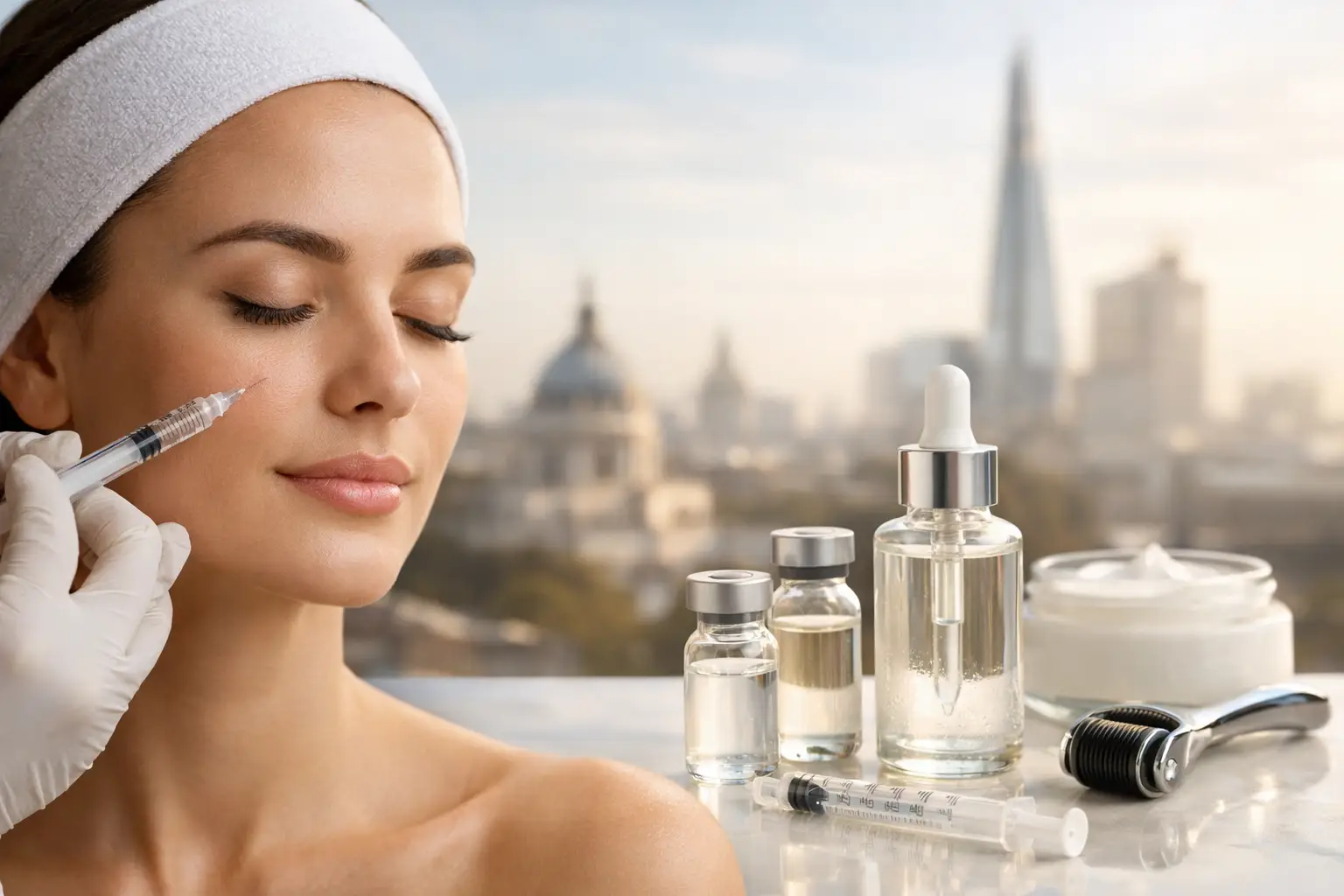
If you are searching for aesthetics east london-fillers-skin boosters-botox, you are probably not looking for dramatic change. Most clients want to look fresher, less tired, and more confident without looking obviously treated. That is where good aesthetic practice matters most – not in doing more, but in choosing the right treatment for the right concern.
The difficulty is that fillers, skin boosters and Botox are often grouped together as if they do the same job. They do not. Each works differently, suits different concerns and gives a different kind of result. Understanding that distinction helps you make better decisions and avoid treatment that is unnecessary, poorly timed or simply not right for your face.
Aesthetics East London – fillers, skin boosters, Botox explained
These treatments all sit within non-surgical aesthetics, but they address different layers and different goals. Botox is used to soften movement-related lines. Fillers are used to restore structure, support or volume. Skin boosters are designed to improve hydration, skin quality and overall texture.
That sounds simple enough, but real treatment planning is rarely one-size-fits-all. A person with early forehead lines may benefit from Botox alone. Someone noticing flattening through the cheeks or deeper folds may be better suited to carefully placed filler. Another client may not need either at first, and would see the best improvement from skin boosters or regenerative skin treatments because the main issue is dehydration, dullness or crepey skin rather than volume loss.
This is why consultation matters. A medically led approach looks at facial movement, skin condition, proportions, lifestyle and expectations before recommending anything.
What Botox is best for
Botox remains one of the most effective treatments for lines caused by repeated expression. The most common areas are the forehead, frown lines and crow’s feet, but it can also be used in other carefully selected areas depending on anatomy and treatment goals.
The aim is not to erase character from the face. Done well, Botox softens harsher movement patterns while keeping natural expression. Most clients want to look rested rather than frozen, and that is a realistic goal when dosing is considered properly.
It is worth being honest about what Botox cannot do. It does not replace lost volume, and it will not improve skin texture in the same way as skin boosters, microneedling or polynucleotides. If a line is deeply etched into the skin at rest, Botox may help stop it worsening and soften it over time, but it may not remove it completely on its own.
Results are temporary and require maintenance. The exact duration varies from person to person, but treatment is not permanent, and factors such as metabolism, muscle strength and previous treatment history all play a part.
Where fillers fit in
Dermal fillers are often misunderstood because the word itself can suggest excess. In reality, modern filler treatment should be about balance and support, not obvious volume. Used carefully, filler can restore areas that have thinned with age, improve facial harmony and soften tired or shadowed features.
Common areas include lips, cheeks, chin, jawline and folds around the mouth, but not every concern should be treated directly where it appears. For example, heaviness or lines lower in the face may partly be caused by loss of support higher up. Treating the foundation rather than simply chasing the fold often gives a more natural result.
This is also where restraint matters. Too much product, poor placement or treating too many areas at once can create an unnatural look. Good practice involves respecting facial proportions, skin thickness and movement. Sometimes the safest and most flattering plan is to stage treatment over time rather than trying to do everything in one session.
Fillers are not ideal for everyone. If the main concern is poor skin quality, dullness or fine crepiness, filler may not be the answer. In those cases, skin-focused treatments can be more effective and more appropriate.
Why skin boosters have become so popular
Skin boosters appeal to clients who want improvement without adding shape or volume. They work by delivering hydration and support within the skin, helping it look smoother, fresher and healthier. The result is usually about quality rather than contour.
They can be particularly useful for dull or dehydrated skin, fine lines, crepey texture and areas that need a subtle refresh, such as the face, neck, décolletage and hands. For some clients, skin boosters are an excellent starting point because they improve the canvas rather than changing facial structure.
What makes them attractive is also what needs to be understood properly – the change is usually subtle and progressive. If you want sharper cheek definition or a fuller lip, skin boosters will not do that. If you want your skin to feel less tired, look more hydrated and sit better under make-up, they may be a very good option.
The best results often come as part of a broader plan. Skin boosters can work well alongside Botox, microneedling or regenerative treatments depending on your skin concerns and age-related changes.
Choosing between fillers, skin boosters and Botox
The right treatment depends on what is actually bothering you when you look in the mirror. If the issue is lines that appear when you frown or raise your eyebrows, Botox is often the most direct option. If your concern is flattening, sagging or loss of facial support, filler may be more suitable. If your skin looks tired, dry or uneven, skin boosters may offer the better return.
Sometimes more than one issue is present at the same time. A client may have strong muscle movement in the upper face, mild mid-face volume loss and dehydrated skin quality. In that case, a combined approach may make sense, but not always all at once.
A careful practitioner will also tell you when not to treat. If expectations are unrealistic, if timing is poor, or if another treatment would be safer and more effective, that should be part of the conversation. Honest advice is one of the clearest signs of quality care.
Aesthetics East London treatments should never feel rushed
Convenience matters, especially for busy professionals and parents, but convenience should not come at the expense of standards. Whether treatment takes place in a clinic or through a professional mobile service, the process should still feel structured, safe and consultation-led.
You should expect a proper discussion about your medical history, previous treatment, allergies, facial assessment and desired outcome. You should also be given realistic guidance on what the treatment can and cannot achieve, how long results are likely to last, what aftercare involves and what normal recovery looks like.
This matters particularly with injectable treatments. Swelling, bruising and short-term tenderness can happen. Timing is important if you have an event, holiday or important meeting. Good planning reduces stress and leads to better experiences overall.
For clients who value privacy and flexibility, home-based appointments can be especially helpful. The key is that the standard of assessment, hygiene, product choice and aftercare should remain high regardless of location. London Essex Aesthetics is built around that principle, combining convenience with a medically informed, personalised approach.
What natural-looking results really mean
Natural results are often discussed, but not always defined. In practice, it means people notice that you look well, not that you have had a procedure. It means movement is softened rather than removed, volume is restored rather than exaggerated, and skin looks healthier rather than artificially altered.
Natural does not mean invisible. You should still see an improvement. It simply means the treatment respects your features instead of reshaping them into something generic.
This is why trends can be unhelpful. A treatment that suits one face may be entirely wrong for another. Age, bone structure, skin quality, lifestyle and personal preference all affect the best plan. What works beautifully for one client may look heavy or unnecessary on someone else.
Safety, maintenance and long-term thinking
One of the most overlooked parts of aesthetics is long-term planning. Chasing quick fixes can lead to a face that feels overtreated over time. A more measured approach usually gives better results – small, well-judged changes, reviewed properly, with maintenance based on how your face and skin actually respond.
Safety sits at the centre of that. Injectable treatments should never be approached casually, even when they are common. Product selection, technique, anatomy, sterile practice and aftercare all matter. So does knowing when a treatment is not appropriate.
It is also sensible to think beyond injectables alone. If pigmentation, redness, acne scarring or hair thinning are part of the bigger picture, other treatments may deserve equal attention. Aesthetic care works best when the plan matches the full concern, not just the most obvious symptom.
If you are considering treatment, the most useful starting point is not asking what is popular. It is asking what you want to improve, how subtle you want the result to be, and whether the plan in front of you feels honest, safe and tailored to your face. That is usually where the best decisions begin.