
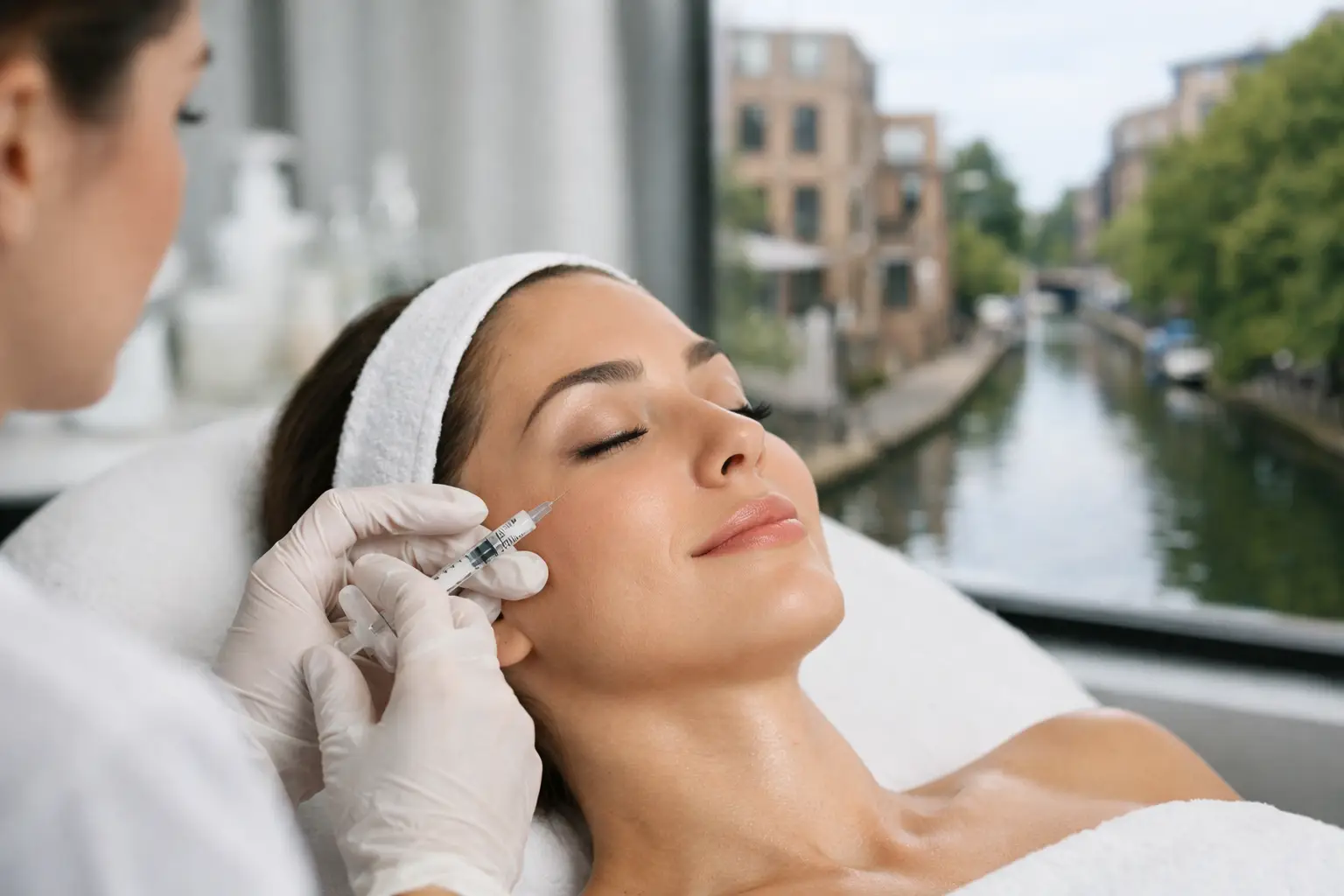
“Where can I get skin boosters in Hackney? – 07904 727272” is a practical question, especially when you want professional treatment without fitting another journey across London into an already busy week. A mobile appointment can bring a consultation-led skin booster treatment to your home or preferred private location, while still keeping the focus where it belongs: on suitability, safe technique and results that look like healthy skin rather than an obvious procedure.
Skin boosters are popular because they can improve hydration, softness and skin quality without being designed to create the shape or projection associated with dermal filler. However, not every dull complexion, fine line or texture concern needs the same treatment. The right provider should take time to understand your skin, goals, medical history and expectations before recommending a plan.
Where can I get skin boosters in Hackney?
For clients in Hackney who value discretion and flexibility, London Essex Aesthetics offers mobile aesthetic appointments across London and Essex. Rather than travelling to a fixed clinic, you can arrange treatment at a suitable private address, subject to an initial consultation and assessment.
The convenience of a home visit should never mean a rushed approach. A professional appointment still begins with discussing the areas that concern you, whether that is tired-looking under-eyes, crepey cheeks, fine lines around the mouth, dullness, dehydration or a loss of overall radiance. Your practitioner should also explain what skin boosters can realistically achieve, how many sessions may be appropriate and whether another treatment would better suit your goals.
For bookings and availability in Hackney, call or message 07904 727272. Appointment options will depend on your location, preferred time and clinical suitability.
What skin boosters are designed to improve
Most skin boosters use a form of hyaluronic acid, a substance that attracts and holds water in the skin. Unlike traditional filler, which is often selected to restore volume or refine facial contours, skin boosters are placed more superficially in carefully chosen areas to support hydration and skin quality.
The effect is usually subtle. You may notice skin looks fresher, smoother and more luminous rather than visibly altered. This makes the treatment particularly appealing if you want a polished, well-rested appearance but do not want friends or colleagues to identify exactly what has changed.
Common treatment areas include the face, neck, décolletage and hands. Some clients are concerned by make-up settling into fine lines or skin that feels dehydrated despite a consistent skincare routine. Others find that their complexion has become less even or bouncy over time. A skin booster may help, but the result depends on factors such as skin condition, lifestyle, sun exposure, smoking, hormones and the product and technique selected.
It is also worth being clear about what treatment cannot promise. Skin boosters will not replace lost facial volume, lift significant skin laxity or remove deep static lines in one appointment. For those concerns, a practitioner may discuss alternatives such as microneedling, polynucleotides, biostimulators, chemical peels or a combination plan. Honest recommendations are more valuable than offering the same treatment to every client.
Why a consultation matters before treatment
A consultation is not simply a formality before injectables. It is the point at which your practitioner can assess whether skin boosters are appropriate and decide how to approach treatment safely. You should be asked about your medical history, allergies, current medication, previous aesthetic treatments and any history of cold sores, skin conditions or adverse reactions.
Your skin should be assessed in good light, with time to discuss both what you would like to improve and what you do not want. For many clients, the priority is looking more refreshed while preserving their natural facial movement and character. Setting that expectation early helps create a more considered plan.
There are occasions when postponing treatment is the sensible option. Active skin infection, inflammation in the intended area, pregnancy or breastfeeding, certain medical conditions and recent procedures may affect eligibility. If you are unwell or have a new skin concern, say so before your appointment rather than assuming it will not matter.
A suitable practitioner should also talk through potential side effects. Temporary redness, swelling, tenderness, small bumps and bruising can occur after injectable treatments. These are usually short-lived, but every client should know what is normal, what aftercare to follow and when to contact their practitioner for advice.
The advantages of a mobile skin booster appointment
A mobile service is particularly useful when privacy and time are limited. You may be balancing work, family commitments or a packed diary, and prefer not to spend additional time travelling before and after an appointment. Being treated in a familiar setting can also feel calmer for clients who are new to aesthetics or nervous about needles.
That said, a home appointment must be set up properly. Your practitioner needs a clean, well-lit space with a stable surface and enough room to work safely. Treatment should never be carried out hurriedly on a sofa, in poor lighting or in an environment where hygiene cannot be maintained. A good provider will explain what is needed before arriving and will be comfortable rearranging if the setting is not appropriate.
The best time to book is not always immediately before a major event. Although many people return to normal activities quickly, bruising and swelling are possible. If you have a wedding, work presentation, holiday or important photographs planned, allow enough time for your skin to settle. Your practitioner can advise on sensible timing based on the treatment area and your individual tendency to bruise.
Preparing for your appointment
Arrive at the appointment with clean skin where possible and avoid applying heavy make-up over the treatment area. It can also help to avoid alcohol before treatment, as this may increase the chance of bruising for some people. Do not stop prescribed medication without speaking to the clinician who manages it, but make sure your aesthetics practitioner knows about all medicines and supplements you take.
After treatment, follow the personalised advice you are given. This commonly includes keeping the area clean, avoiding touching or pressing on it unnecessarily, and postponing strenuous exercise, excess heat, swimming and alcohol for the period advised. You may be asked to avoid make-up for a short time, particularly where there are visible injection points.
Results develop gradually rather than appearing all at once. Initial hydration may be noticeable early, but the full benefit can take time to settle. Some skin booster protocols involve an initial course, often followed by maintenance appointments. The recommended schedule varies according to the product used, your skin and the outcome you want to maintain.
Questions worth asking before you book
Before agreeing to treatment, ask what product is being recommended and why it suits your skin concern. You should also ask how many sessions may be needed, what downtime is realistic, what the total cost will be and how aftercare support works if you have a question once the appointment has finished.
It is equally reasonable to ask whether skin boosters are the best option at all. A practitioner who is focused on natural, balanced outcomes will be able to explain the trade-offs. For example, skin boosters can be excellent for hydration and glow, while a different treatment may be more suitable for pigmentation, acne scarring, facial volume loss or deeper lines.
Choosing where to get skin boosters in Hackney should feel straightforward, not pressured. Book when you have time for a proper conversation, follow the aftercare carefully, and choose a treatment plan that respects both your skin and your schedule.