
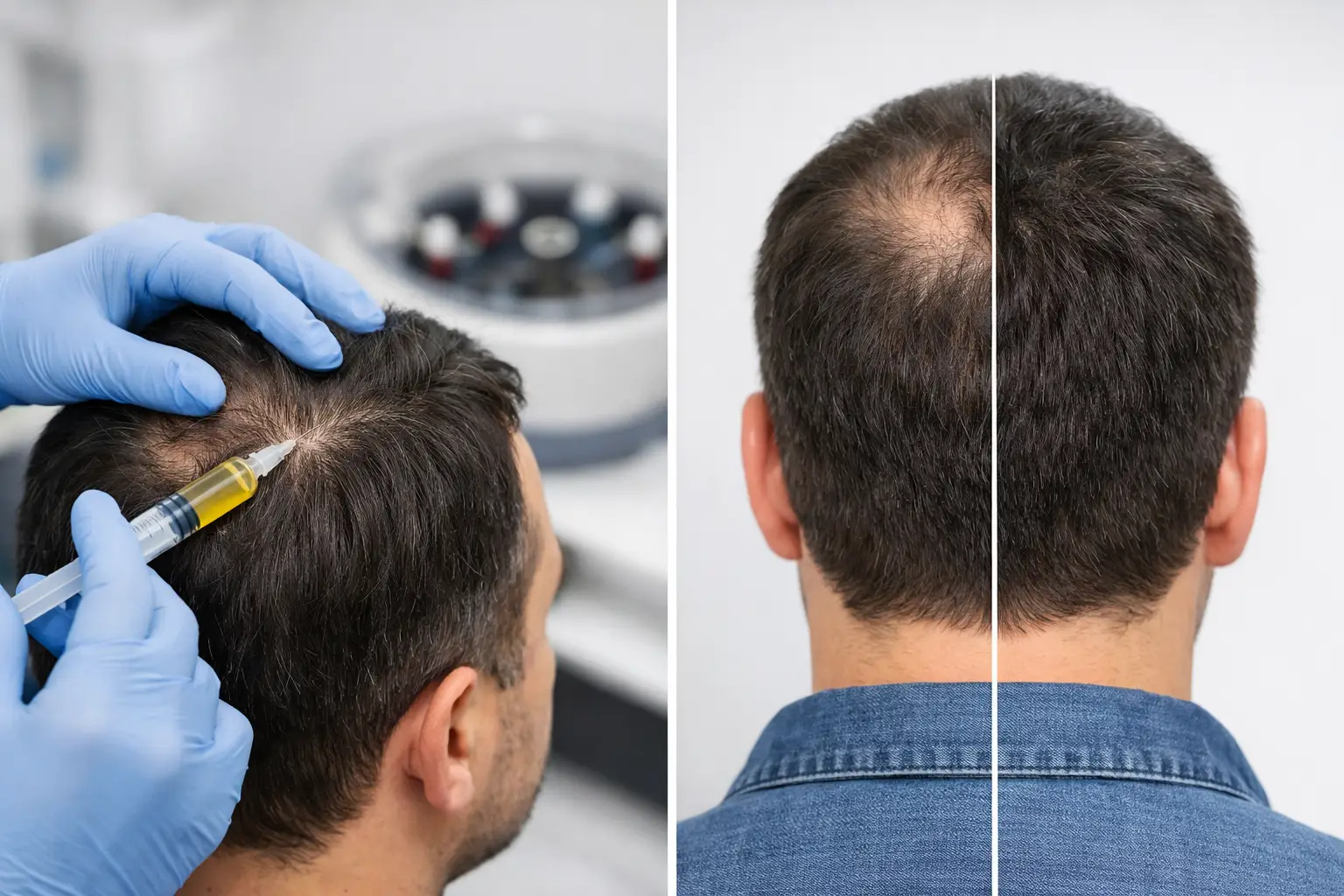
Hair shedding can feel deeply personal, particularly when a widening parting, reduced density or a receding hairline becomes harder to disguise. PRP hair treatment results are often appealing because the treatment uses your own blood components to support the scalp and existing follicles, rather than relying on a one-size-fits-all approach. However, the right expectation is gradual improvement, not an instant transformation.
For many people, PRP can be a valuable part of a wider plan for early-stage thinning or shedding. A consultation is the point at which this becomes clearer: the pattern, cause and duration of hair loss all matter, as do your medical history, current medication and the condition of your scalp.
What PRP hair treatment is designed to do
Platelet-rich plasma, usually shortened to PRP, is created from a small sample of your blood. The sample is processed to concentrate the platelet-rich portion, which contains naturally occurring growth factors. This plasma is then carefully injected into areas of the scalp affected by thinning.
The aim is to create a healthier environment around existing hair follicles and encourage them to remain in, or return to, a more active growth phase. PRP does not create brand-new follicles where follicles are no longer present. This distinction is important when discussing likely outcomes. It tends to be most relevant where hair is becoming finer, shedding has increased, or there is still visible hair in the treatment area.
Results can look different from person to person. Some clients notice less shedding first, while others become aware that their hair feels stronger or easier to style. Over time, improved density and thicker-looking strands may become more noticeable, especially in areas such as the parting, crown or hairline where thinning was initially mild to moderate.
PRP hair treatment results: a realistic timeline
Hair follows a slow biological cycle, so progress needs patience. It is common not to see visible change immediately after treatment. In the first few weeks, the scalp may simply settle following the injections. There can be mild tenderness, redness or temporary sensitivity, which should resolve quickly for most people.
At around six to eight weeks, some people report reduced shedding or a subtle improvement in how their hair feels. This is encouraging, but it is still early. More meaningful visible changes are commonly assessed after three to six months, particularly once a planned course of sessions has been completed.
A fuller-looking parting, better coverage at the crown and hair that appears less fine are realistic goals for suitable candidates. The degree of improvement varies. PRP may help preserve and strengthen existing hair, but it cannot promise the density someone had years earlier or reverse every form of hair loss.
Photographs taken before treatment and at agreed review points are useful. Hair can look different depending on lighting, length, parting and styling, so consistent images give a far more reliable picture than day-to-day checking in the mirror.
Why more than one session is usually advised
PRP is commonly planned as an initial course rather than a single appointment. A practitioner may recommend several treatments spaced over a number of weeks, followed by maintenance sessions where appropriate. The exact schedule should be based on your presentation and response, not a fixed promise.
This approach allows the scalp to receive repeated stimulation while giving enough time to assess change. It also creates a sensible opportunity to review whether PRP remains the right option, whether expectations are being met and whether another treatment or medical referral should be considered.
What affects your outcome?
The underlying reason for thinning is one of the biggest factors. Hereditary pattern hair loss may respond differently from shedding related to stress, illness, hormonal changes, nutritional deficiencies, medication or scalp inflammation. Sudden or patchy hair loss should always be assessed properly rather than assumed to be a cosmetic concern alone.
Timing matters too. Treating earlier thinning, when follicles are still active, generally offers more potential than treating areas that have been smooth and bare for a long time. Your age, general health, hormone profile, smoking status and nutritional intake can also influence the hair growth cycle and your response.
Consistency is another practical consideration. Missing planned sessions or stopping maintenance before results have stabilised may limit what can be achieved. Equally, a personalised plan may include advice to speak with your GP or a specialist if symptoms suggest an underlying health issue. A responsible consultation does not treat every type of hair loss in the same way.
What the appointment feels like
PRP treatment begins with a consultation and suitability assessment. If it is appropriate to proceed, a small blood sample is taken and prepared during the appointment. The practitioner then maps the areas of concern and administers a series of precise injections across the scalp.
Most people describe the sensation as short, sharp pressure or pinching rather than prolonged pain. Comfort measures can be discussed in advance. The appointment is designed to be efficient, but it should never feel rushed: correct technique, careful hygiene and clear aftercare are central to a good treatment experience.
For clients who value privacy or have demanding schedules, a mobile appointment can make a treatment course easier to maintain. London Essex Aesthetics provides consultation-led care in the comfort of your home or preferred private setting, while maintaining the professional standards needed for injectable treatments.
Aftercare that supports the treatment plan
Your practitioner will provide specific aftercare based on your needs, but there are a few general principles. Keep the scalp clean, avoid touching the treated areas unnecessarily and follow the advice given about washing your hair, exercise and heat exposure after your appointment. It is also sensible to avoid alcohol and strenuous activity for the timeframe recommended to you, as these can contribute to temporary swelling or bruising.
Do not introduce harsh new scalp products immediately after treatment. If you use prescribed or over-the-counter hair-loss products, discuss them during your consultation so that your plan is coordinated and you know whether any timing adjustments are needed.
Contact your practitioner if you have concerns after treatment, particularly persistent discomfort, increasing redness or signs of infection. Although PRP uses your own plasma and is generally well tolerated when performed appropriately, all injectable procedures carry potential risks that should be discussed before you consent.
Is PRP the right choice for your hair concerns?
PRP may be worth considering if you are noticing early thinning, increased shedding or a gradual reduction in density and would like a non-surgical option. It can suit people looking for a treatment that works with their own biology and who are prepared to follow a course rather than judge the outcome after one appointment.
It may be less suitable where there is an active scalp infection, certain blood or platelet conditions, uncontrolled medical issues, or a cause of hair loss that requires medical investigation first. Pregnancy, breastfeeding, medication and relevant health conditions should always be disclosed during consultation.
The most reassuring PRP hair treatment results are usually the ones that look believable: less visible scalp, stronger-looking hair and a gradual return of confidence rather than an abrupt or exaggerated change. The best next step is a thorough assessment that gives you an honest view of what your hair may realistically achieve, and the care plan needed to support it.