
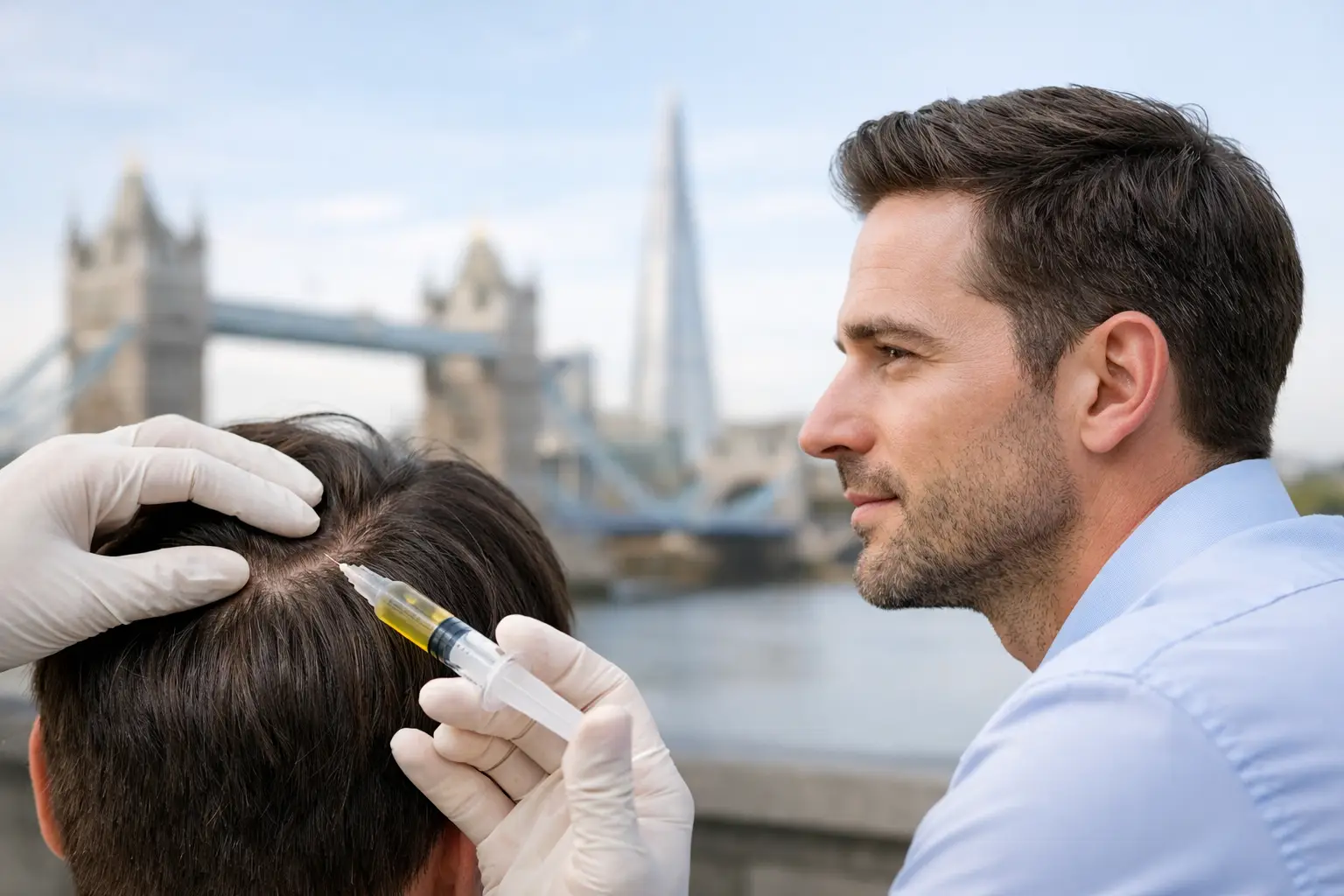
Hair thinning can feel particularly personal. You may notice more hair in the shower, a widening parting or reduced density around the hairline long before anyone else does. PRP hair treatment London clients choose is not a quick cosmetic fix, but a regenerative treatment that may support the scalp and existing follicles when it is appropriate for the cause and stage of thinning.
At London Essex Aesthetics, the starting point is always an individual consultation. Hair loss has many possible triggers, from genetics and hormonal changes to stress, illness, nutritional deficiencies and certain medications. Understanding that picture matters because the most suitable plan is rarely the same for everyone.
What is PRP hair treatment?
PRP stands for platelet-rich plasma. Platelets are components of your blood that contain growth factors involved in normal tissue repair and cell signalling. During treatment, a small sample of your blood is taken and placed in a centrifuge. This separates the platelet-rich plasma from other blood components.
The concentrated plasma is then carefully administered into selected areas of the scalp using a series of small injections. The aim is to create a more supportive environment around existing, weakened follicles. PRP does not create new hair follicles, and it cannot reliably reverse every form of hair loss. Its role is to support hair that is still present but becoming finer, weaker or less active.
This distinction is important. People seeking treatment after noticing early changes in density often have different expectations and potential outcomes from someone with long-standing areas of complete hair loss. Honest assessment comes before treatment planning.
Who may benefit from PRP hair treatment in London?
PRP is often considered by adults experiencing gradual thinning associated with androgenetic hair loss, commonly known as male or female pattern hair loss. It may also be discussed where hair shedding has settled but density has not fully returned, depending on the individual circumstances.
It can be particularly appealing to clients who want a non-surgical approach and prefer to use their own blood product rather than a synthetic injectable. However, being interested in PRP and being a suitable candidate are not quite the same thing. The condition of the scalp, pattern of thinning, medical history and current medication all need consideration.
A consultation should also identify when PRP is not the first step. Sudden shedding, patchy hair loss, scalp pain, inflammation or significant changes following illness may need medical assessment before aesthetic treatment is considered. Addressing an underlying cause can be more valuable than proceeding directly with a procedure.
PRP may not be suitable for people with an active scalp infection, certain blood or platelet disorders, or those taking particular blood-thinning medication. Pregnancy, breastfeeding, current serious illness and recent medical treatment may also affect whether or when treatment is appropriate. These are not boxes to tick quickly – they are part of safe clinical decision-making.
What happens at a PRP appointment?
A well-planned appointment is calm, discreet and consultation-led. For clients who value privacy and a busy schedule, mobile treatment can make the process more manageable, provided the treatment environment is suitable for safe practice.
Your practitioner will review your medical history, concerns and goals, then assess the areas of thinning and discuss realistic expectations. Before photographs may be recommended so changes can be reviewed properly over time. Hair growth is gradual, and memory is not always a reliable way to judge subtle changes in density or shedding.
The blood draw is usually straightforward. Once the sample has been processed, the scalp is cleansed and the PRP is injected across the treatment area. You may feel brief pinching or pressure. Sensitivity varies, particularly around the hairline and crown, but appointments are generally well tolerated.
Afterwards, there can be mild tenderness, redness, tightness, small raised areas or a headache. These effects are usually temporary. Your practitioner will explain appropriate aftercare based on your treatment and health profile, including when to wash your hair, exercise and use scalp products.
How many sessions will you need?
PRP is generally approached as a course rather than a single appointment. Many treatment plans begin with a series of sessions spaced several weeks apart, followed by review and, where appropriate, maintenance appointments. The exact schedule depends on the pattern of thinning, your response and the wider plan agreed during consultation.
Patience is essential. The hair growth cycle is slow, so changes are not usually judged in days or even a couple of weeks. Some clients first notice less shedding or hair that feels stronger. Visible improvements in hair calibre or coverage, where they occur, may take several months.
Results vary. Genetics, age, hormones, lifestyle, the duration of hair thinning and the health of remaining follicles all play a part. A responsible practitioner should never promise a particular level of regrowth or imply that PRP can restore a full head of hair in every case.
PRP compared with other approaches to thinning hair
PRP can sit alongside a broader hair-health plan, but it is not automatically a replacement for medical treatment. Depending on the cause of thinning, a GP, dermatologist or hair-loss specialist may discuss topical treatments, prescription medication, blood tests or management of an underlying health concern.
For some clients, PRP is used as a supportive treatment alongside medically advised options. For others, it may be chosen when they are not suitable for, do not wish to use, or have not tolerated another approach. The key is not to treat every form of thinning as identical.
Lifestyle also has a role, although it should not be oversold. Adequate protein intake, managing restrictive diets, treating confirmed nutritional deficiencies and reducing traction from tight hairstyles can all be relevant in the right circumstances. These measures will not alter genetic hair loss on their own, but they can support healthier hair and help avoid preventable stress on the scalp.
Safety and choosing the right practitioner
Because PRP involves drawing blood and administering injections, clinical standards matter. The treatment should be carried out by a suitably trained practitioner using appropriate infection-control procedures, sterile equipment and a thorough consultation process.
Convenience should never mean compromise. For a mobile appointment, the chosen setting needs adequate space, good lighting, a clean treatment surface and the privacy to discuss medical information properly. A professional practitioner should be comfortable postponing treatment if the environment or your health status makes it unsuitable that day.
You should also receive clear information about likely sensations, expected downtime, potential side effects and when to seek advice. This is particularly valuable when treatment is delivered at home, where clients often appreciate being able to recover quietly without travelling straight afterwards.
Preparing for your consultation
Come prepared to discuss when the thinning began, whether it is progressing, any family history of hair loss, recent illness, major stressors and medication or supplements you take. If you have had relevant blood tests or a medical diagnosis, mention this too. Small details can change the recommendation.
Avoid treating consultation as a sales conversation. It is the point at which you should be able to ask whether PRP is likely to be worthwhile for your pattern of hair loss, what alternatives exist and how progress will be monitored. If the answer is that another route is more appropriate, that is useful guidance, not a missed opportunity.
Hair thinning rarely needs an impulsive decision. The most reassuring next step is a thoughtful assessment that respects both the biology of your hair and the result you hope to see over time.