
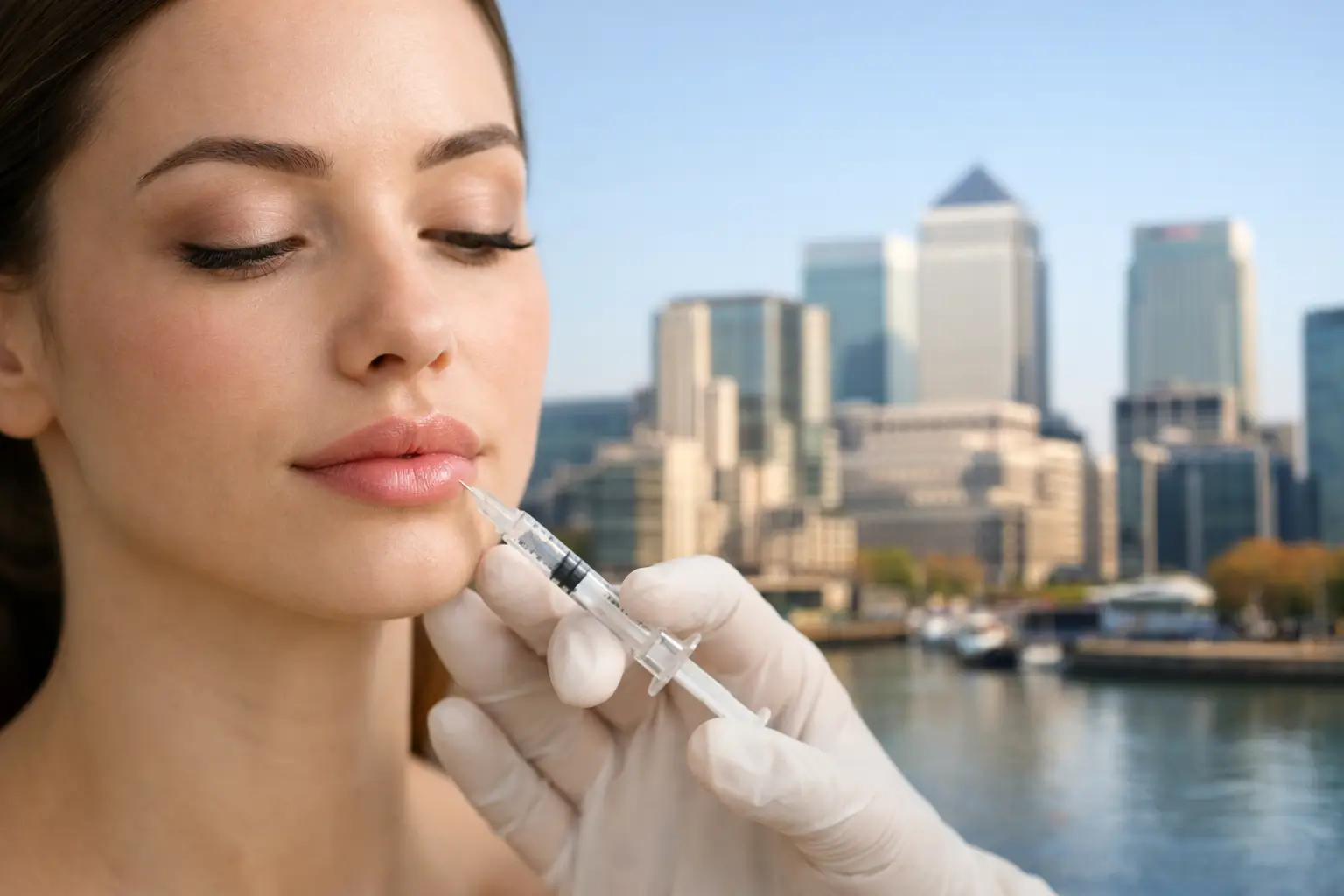
When searching for lip fillers Canary Wharf – 07904 727272, the priority should be more than finding a convenient appointment. Lip enhancement is a precise treatment: the right plan should respect your facial proportions, your natural lip shape and the look you want to maintain in everyday life. For many clients, the best result is not a noticeably different face, but lips that look hydrated, balanced and quietly refreshed.
At London Essex Aesthetics, lip filler appointments are consultation-led and can be provided in the privacy of your home or preferred location. This is particularly suited to busy Canary Wharf professionals and clients who value discretion, flexibility and attentive aftercare without compromising on clinical standards.
What lip filler can and cannot do
Lip filler uses hyaluronic acid gel to add or restore volume, improve definition and support hydration. Hyaluronic acid occurs naturally in the body and attracts water, which is why it is widely used in modern dermal filler treatments. The product, placement technique and amount used all influence the final result.
A carefully planned treatment may soften the appearance of fine lines around the lip border, improve symmetry where appropriate, restore volume lost over time or create a little more structure in a naturally flatter lip. Some clients simply want a more defined cupid’s bow, while others would like a subtle lift in the corners of the mouth.
What filler should not do is override your anatomy. Very thin lips, a longer upper lip, active movement around the mouth and the condition of the skin all affect what can be achieved safely in one session. Trying to create a dramatic change with too much product can lead to an overfilled appearance, product migration or lips that no longer suit the rest of the face. A gradual approach is often the more refined choice.
Lip fillers in Canary Wharf: a personalised approach
There is no universally flattering lip shape and no set amount of filler that works for everyone. A responsible consultation considers your profile as well as the front view, the ratio between the upper and lower lip, facial balance and how the lips move when you speak and smile.
Before treatment, your practitioner should discuss your medical history, allergies, previous aesthetic treatments and the result you have in mind. Photographs can be useful for communicating preference, but they are a starting point rather than a template. Your lips have their own structure, and a treatment plan should be built around it.
You will also have the opportunity to discuss whether treatment is appropriate on the day. Lip filler may need to be postponed if you have an active cold sore, infection, broken skin or are feeling unwell. Clients who are pregnant or breastfeeding should not have dermal filler treatment. Certain medical conditions and medications can also affect suitability, which is why honest disclosure is essential.
For first-time clients, a conservative amount of filler is commonly the sensible option. It allows you to see how your lips settle and whether you would like further adjustment at a later appointment. The aim is measured enhancement, not pressure to use more product than you need.
What happens during a mobile lip filler appointment
A home appointment should still follow a professional clinical process. Convenience never removes the need for a clean, prepared treatment area, suitable products, informed consent and clear safety procedures.
Your appointment begins with consultation and assessment. Once the plan is agreed, the treatment area is cleansed and marked where needed. A topical numbing cream may be used to improve comfort, although many modern fillers also contain local anaesthetic. The filler is then placed with a needle, cannula or a combination of techniques depending on the anatomy and desired outcome.
Treatment itself is usually relatively quick, but it should never feel rushed. Your practitioner will assess the lips as they go, making small, controlled adjustments rather than treating from a fixed formula. Mild pressure, pinching or a brief stinging sensation can occur, but comfort should be checked throughout.
Immediately afterwards, lips can look fuller than the settled result because of temporary swelling. You may also have slight redness, tenderness or bruising. This is one reason an at-home appointment can be reassuring: you can remain in familiar surroundings and avoid travelling across London straight after treatment.
Natural-looking results take patience
The final result should be judged after swelling has settled, not in the first few hours. Most clients experience some degree of swelling, especially after their first lip filler treatment, and this can be more noticeable the following morning. Bruising varies from person to person and may last several days.
A review, where clinically appropriate, can help assess how the filler has settled and whether your original goal has been met. Some people are happy after one subtle treatment; others prefer to build volume in stages. Neither approach is automatically better. It depends on your starting point, tissue quality, lifestyle and the look you want to preserve.
Longevity also varies. Lip filler is not permanent, and the rate at which the body breaks it down differs between clients. Movement in the mouth area, metabolism, product choice and the quantity used can all play a part. Rather than treating to a rigid timetable, it is better to arrange maintenance when you feel your results are beginning to soften and a clinical assessment confirms that further treatment is suitable.
Lip filler aftercare that protects your result
Good aftercare supports a comfortable recovery and helps you understand what is normal. For the first 24 to 48 hours, avoid pressing or massaging the lips unless you have been specifically instructed to do so. Try to keep the area clean, avoid intense exercise, excessive heat, saunas and steam rooms, and limit alcohol if possible, as these can worsen swelling and bruising.
Use a cool compress gently if needed, but do not apply ice directly to the skin. Sleeping with your head slightly elevated on the first night may also help with swelling. It is sensible to avoid dental treatment, facial treatments and other procedures around the mouth for the period advised by your practitioner.
You should receive clear advice on how to contact your practitioner after treatment. While most side effects are mild and temporary, filler is a medical aesthetic procedure and rare complications require prompt assessment. Increasing or severe pain, blanching or unusual discolouration of the skin, marked coldness, mottling, visual disturbance or rapidly worsening swelling should never be ignored. Contact your practitioner urgently and seek emergency medical support if advised.
Questions worth asking before you book
A professional provider will welcome questions. Ask who will carry out your treatment, what product is being recommended, why it suits your lips and what aftercare and follow-up arrangements are in place. You should also feel comfortable asking about likely downtime, the risks involved and what happens if you are not suitable for treatment.
Be cautious of offers built around an unusually large quantity of filler, a one-size-fits-all style or pressure to book immediately. Your face is not a trend, and you should have enough time to consider the recommendation before giving consent. The safest appointment is one where you feel informed, heard and able to say no.
For clients seeking lip fillers in Canary Wharf, a mobile appointment offers a practical way to access considered, private care around a demanding schedule. The right treatment is not about changing your identity. It is about making a carefully judged improvement that still feels like you when you look in the mirror.