
If you are searching for aesthetics Thorpe Bay anti wrinkle explained, you are probably not looking for hype. You want a clear answer to a simple question – what does anti-wrinkle treatment actually do, and is it the right option for you? For most people, the decision comes down to wanting a fresher, more rested appearance without looking frozen, obvious or unlike themselves.
Anti-wrinkle treatment is one of the most established non-surgical aesthetic options available, but it is also one of the most misunderstood. People often hear broad claims, mixed opinions and outdated assumptions. A proper consultation should cut through that and explain what the treatment can realistically achieve, where it works best and when another option may be more suitable.
What aesthetics Thorpe Bay anti wrinkle explained really means
In practical terms, anti-wrinkle treatment refers to prescription-only medication used to relax selected facial muscles. These are the muscles responsible for expression lines that form through repeated movement over time. Common examples include frown lines between the brows, forehead lines and crow’s feet around the eyes.
When those muscles are treated carefully, the overlying skin is not being folded as strongly or as often. That softens existing dynamic lines and can help prevent them becoming more deeply established. The aim is not to erase every expression. Done well, treatment should leave you looking refreshed and less tense, while your face still moves naturally.
This is where technique matters. The same product can produce a heavy or unnatural outcome in inexperienced hands, or a subtle and balanced result when treatment is planned properly. Dose, placement, muscle strength, facial asymmetry and your natural expressions all need to be considered.
How anti-wrinkle treatment works
The treatment works by temporarily interrupting the signal between nerve and muscle in specific areas. That means the treated muscle contracts less strongly for a period of time. As movement reduces, the skin can sit more smoothly.
Results do not appear immediately. Most people begin to notice a change within a few days, with the full effect usually visible around two weeks after treatment. That delay is normal and forms part of proper expectation setting.
The effects are temporary. For many clients, results last around three to four months, although that varies. Faster metabolism, stronger facial movement, regular exercise and individual response can all affect longevity. Some people find results last a little longer after repeated treatments, but this is not guaranteed.
Which areas can be treated
The most common treatment areas are the upper face. These include the horizontal forehead lines, the vertical frown lines between the eyebrows and the fine lines at the outer corners of the eyes. These are usually the best starting points because they respond predictably and can make a meaningful difference without changing your facial identity.
Some clients are also suitable for treatment in other areas, such as a downturned mouth, chin dimpling or excessive jaw tension. These treatments need careful assessment because not every concern is best managed with anti-wrinkle injections alone. For example, lower face concerns often involve skin quality, volume loss or structural changes as well as muscle activity.
This is why a consultation-led approach matters. If a line is visible even when your face is fully at rest, muscle relaxation may improve it, but it may not remove it completely. In those cases, skin boosters, microneedling, polynucleotides or other regenerative treatments may be more helpful as part of a broader plan.
Who anti-wrinkle treatment suits best
Anti-wrinkle treatment tends to work best for adults who want to soften expression lines while keeping a natural look. Some people choose it as an early preventative step when lines start to linger after movement. Others come later, when a tired or tense appearance has become more noticeable.
There is no single right age to start. Suitability depends more on facial anatomy, muscle movement, skin condition and treatment goals than age alone. A client in their late twenties may be a good candidate if they have strong frowning patterns. Someone older may benefit too, but may need a more combined approach to address deeper lines, volume changes and skin texture.
The treatment may not be suitable if you are pregnant, breastfeeding, have certain neurological conditions, active infection in the area or specific medical contraindications. A responsible prescriber should screen for this properly before any appointment goes ahead.
What a good consultation should cover
A proper anti-wrinkle consultation should feel measured, not rushed. You should be asked what is bothering you, what kind of result you want and whether you have had treatment before. Medical history, allergies, current medication and previous reactions all matter.
Facial assessment is equally important. A practitioner should look at your face both at rest and in motion, assess muscle strength and explain whether your expectations are realistic. If one brow sits higher than the other, if your forehead compensates heavily for eyelid position, or if your expressions are naturally very animated, treatment needs to be adjusted accordingly.
You should also be told what the treatment cannot do. It will not replace surgery. It will not improve loose skin. It will not lift heavy jowls. Honest guidance is part of safe aesthetics, and in many cases the best recommendation is a phased plan rather than doing everything at once.
What treatment day is actually like
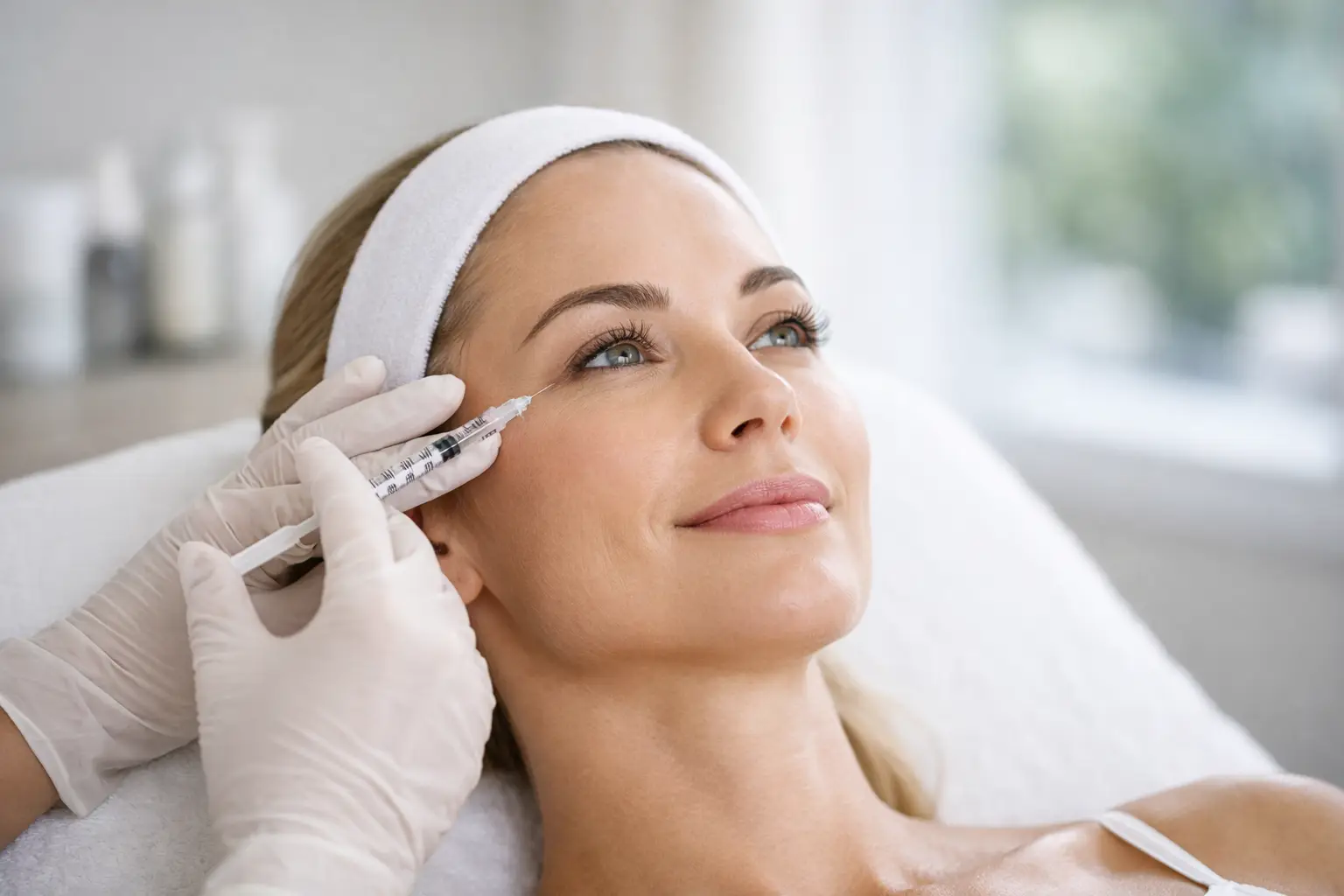
The procedure itself is usually quick. After consent and photographs, the treatment areas are cleaned and carefully marked if needed. A series of very small injections is then placed into the targeted muscles using a fine needle. Most people find it manageable, with only brief discomfort.
There is little downtime, which is one reason anti-wrinkle treatment remains so popular with busy clients. Mild redness, slight swelling at injection points or occasional minor bruising can happen, but these effects are usually short-lived. Most people return to normal daily activity the same day.
Aftercare advice is straightforward but should still be followed carefully. You may be advised to remain upright for several hours, avoid strenuous exercise for the rest of the day and leave the area untouched. Your practitioner should also tell you when to expect results and whether a review appointment is appropriate.
Anti-wrinkle treatment and natural results
One of the biggest concerns clients raise is whether they will still look like themselves. That concern is valid. Over-treatment, poor assessment and standardised dosing can all create results that look unnatural.
A good outcome is not about removing all movement. It is about reducing excessive movement in a way that still respects your features. Some clients want a very soft result with gentle movement retained. Others prefer a smoother look in specific areas. Neither is wrong, but both require a tailored plan.
This is particularly important for clients who value discretion. Many people do not want others to notice they have had treatment. They simply want to look less tired, less drawn or less stern. That is often where subtle anti-wrinkle treatment is at its best.
Risks, side effects and why safety matters
Although anti-wrinkle treatment is common, it is still a medical procedure. Side effects can include bruising, swelling, headache or temporary asymmetry. In some cases, nearby muscles can be affected if product placement is not accurate, which is why detailed knowledge of facial anatomy matters.
Prescription-only treatments should only be provided following an appropriate medical consultation and prescribing process. A lower price or a rushed appointment is never a fair trade for safety. The quality of the assessment, product handling, technique and aftercare all contribute to the standard of care you receive.
For clients choosing treatment at home, those standards should not drop. A mobile appointment should still feel clinical, organised and professional, with the same attention to consent, hygiene, documentation and aftercare as you would expect in a fixed setting.
When anti-wrinkle treatment is not enough on its own
Some concerns are only partly related to muscle movement. If your skin feels dull, crepey or dehydrated, anti-wrinkle treatment may help the movement pattern but not the overall skin quality. If facial volume has reduced through ageing, relaxation alone will not restore support.
That does not mean anti-wrinkle treatment is the wrong choice. It may still be part of the answer. It simply means that the best result often comes from matching the treatment to the cause. In practice, that might involve combining anti-wrinkle treatment with skin boosters, collagen-stimulating treatments or targeted skincare over time.
This slower, more personalised approach usually gives more refined results than trying to solve every concern with one appointment.
A clearer way to decide
If you have been looking up aesthetics Thorpe Bay anti wrinkle explained, the key point is this – anti-wrinkle treatment is not about changing your face. It is about softening selected lines caused by facial movement, in a controlled and temporary way, with treatment planned around your anatomy and goals.
The right next step is not guessing from before-and-after images or social media claims. It is having a proper consultation with a qualified practitioner who will tell you when the treatment is appropriate, when it is not, and how to keep the result balanced and natural. When aesthetics is approached that way, confidence tends to follow quite naturally.