
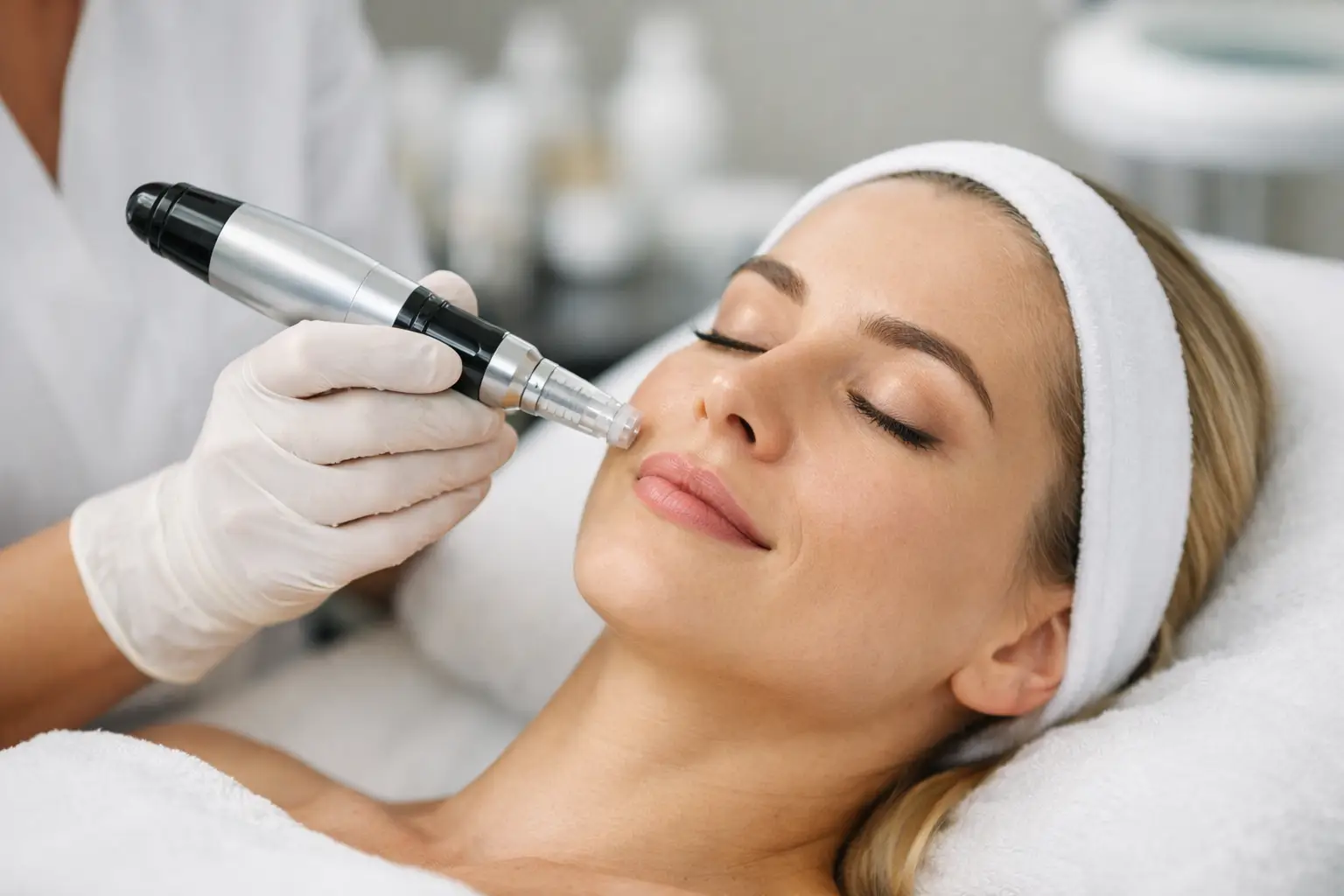
If you are searching for aesthetics Harlow – do you do microneedling?, the short answer is yes, microneedling is a widely used treatment for improving skin texture, tone and overall skin quality. The better question is whether it is the right treatment for your skin, your concerns and your expectations. That is where a proper consultation matters.
Microneedling is often chosen by clients who want fresher, smoother, healthier-looking skin without changing the shape of the face or creating an obvious treated look. It sits firmly in the category of regenerative skin treatments. Rather than adding volume or freezing movement, it works by encouraging the skin to repair itself in a controlled way.
Aesthetics Harlow – do you do microneedling and what does it treat?
Microneedling uses very fine sterile needles to create controlled micro-injuries in the skin. That sounds more dramatic than it is. The purpose is to stimulate the skin’s natural healing response, including collagen and elastin production. Over time, this can help improve skin texture, refine the appearance of pores and soften certain types of scarring and lines.
It is commonly used for dull skin, uneven texture, post-acne marks, mild scarring, fine lines and general loss of firmness. Some clients also choose it to help with pigmentation concerns, although this depends on the type of pigmentation and the skin tone being treated. In some cases, microneedling can support better skin quality on the face, neck and décolletage, and sometimes other body areas too.
The key point is that microneedling is not a one-size-fits-all treatment. It can be excellent for one person and less suitable for another. Skin sensitivity, active acne, rosacea, infection, certain medications and medical history all need to be considered before treatment goes ahead.
Why clients ask about microneedling
Many people want visible improvement without looking as if they have had work done. That is exactly why microneedling remains popular. It is a treatment aimed at skin health as much as appearance. The results tend to build gradually, which suits clients who prefer subtle change.
It also appeals to people who are not ready for injectables, or who already have injectable treatments and want to improve the quality of the skin itself. Smoother texture, brighter tone and a more rested appearance often make as much difference as volume correction.
That said, microneedling has limits. If the concern is deep static lines, significant laxity or substantial volume loss, it may need to be combined with other treatments or replaced by a more suitable option. Honest advice matters here. A good treatment plan should not force microneedling to solve concerns it cannot realistically fix.
What to expect from a microneedling appointment
A proper appointment starts well before the device touches the skin. Your practitioner should review your concerns, your medical history, your skincare routine and any recent treatments. This helps determine whether microneedling is appropriate and how intensive the session should be.
The skin is cleansed thoroughly and prepared for treatment. A microneedling device is then passed across the treatment area in a controlled pattern. Depth and technique vary depending on the area being treated, the skin condition and the treatment goal. The sensation is usually manageable, often described as scratchy or mildly prickly rather than painful.
After treatment, the skin usually looks red, rather like mild sunburn. Some clients also notice warmth, tightness or slight swelling for a short period. This is expected. The skin then begins its recovery process over the next few days.
For mobile appointments, the standard should remain the same as any well-run clinic setting. Clean preparation, correct sharps handling, infection control and clear aftercare are not optional extras. Convenience should never come at the expense of safety.
How long does recovery take?
Downtime is one of the most common questions, and the answer depends on treatment depth and individual skin response. For many clients, redness settles significantly within 24 to 48 hours. Some dryness, sensitivity or mild flaking can follow for a few days.
Most people can return to normal daily activities quickly, but there are a few sensible restrictions. Skin should be treated gently in the immediate aftermath. Heat, intense exercise, active skincare ingredients and sun exposure usually need to be avoided for a short period. The aim is to support healing rather than overload the skin while it is vulnerable.
If you have an event approaching, timing matters. Microneedling is not usually something to book the day before a wedding, party or important meeting. Even when recovery is straightforward, it is better to allow your skin enough time to settle.
When will you see results?
Some clients notice a fresher glow once the initial redness has gone down, but the more meaningful changes develop over time. Collagen production is gradual. This means the real benefits tend to appear over several weeks, with further improvement after a course of treatment.
For general skin refreshment, a series of sessions may be recommended. For acne scarring or more established textural concerns, a longer course is often needed. This is one of the most important expectations to set properly. Microneedling is effective, but it is rarely a single-treatment fix for more stubborn concerns.
Consistency matters as much as the treatment itself. Good home skincare, sensible sun protection and appropriate spacing between sessions all influence the result.
Who is a good candidate for microneedling?
Microneedling suits many adults who want to improve skin quality in a natural-looking way. It is often a strong option for clients with early signs of ageing, mild acne scarring, enlarged pores or skin that looks tired and uneven.
Suitability becomes more nuanced if you have active inflammatory acne, eczema in the treatment area, certain forms of pigmentation, a tendency to keloid scarring, recent isotretinoin use or an active skin infection. Pregnancy, breastfeeding and some medical conditions may also affect treatment planning depending on the wider context and any additional products involved.
This is why consultation-led care matters more than chasing a popular treatment. The safest and most effective plan is the one built around your skin, not social media trends.
Aesthetics Harlow – do you do microneedling at home visits?
Yes, microneedling can be carried out as a mobile treatment when it is performed by a suitably trained practitioner working to proper clinical standards. For many clients, having treatment in a familiar private environment is part of the appeal. It saves travelling time, feels discreet and makes it easier to fit appointments around work or family life.
The setting, however, should still be assessed appropriately. Good lighting, a clean workable area and correct treatment preparation all matter. A professional practitioner will guide you on how to prepare the space and what aftercare to follow once the appointment is complete.
For clients in Harlow and surrounding parts of Essex, that combination of convenience and medically minded care can make regular skin treatments far easier to maintain. London Essex Aesthetics is built around that principle – bringing advanced aesthetic care to the client without lowering standards.
Microneedling compared with other skin treatments
Microneedling is sometimes grouped together with chemical peels, skin boosters and regenerative treatments, but they are not interchangeable. A peel works differently, focusing on controlled exfoliation and skin renewal through acids. Skin boosters hydrate and improve skin quality by delivering injectable hyaluronic acid into the skin. Polynucleotides and other regenerative options may target repair through different biological pathways.
Which is best depends on the concern. If dehydration is the main issue, microneedling alone may not be enough. If acne scarring is the problem, it may be more useful than a superficial peel. In many cases, the strongest results come from thoughtful treatment planning rather than relying on one modality.
That is also where professional honesty is valuable. Not every client needs the newest treatment. Many simply need the right treatment, carried out well, with realistic expectations.
How to prepare and care for your skin after treatment
Preparation is usually straightforward. Skin should be free from fake tan, irritation and active infection. You may be advised to pause certain active skincare products beforehand, depending on what you use.
After treatment, the focus should be on protecting the skin barrier. Gentle cleansing, appropriate hydration and daily SPF are usually central to aftercare. Picking, scrubbing or rushing back into strong acids and retinoids too soon can disrupt healing and increase irritation.
It is also worth remembering that better skin results often come from the combination of in-clinic treatment and disciplined home care. Microneedling can create the conditions for improvement, but your daily habits help maintain it.
If you have been asking aesthetics Harlow – do you do microneedling?, the most useful next step is not simply booking the treatment. It is having your skin assessed properly so you know whether microneedling is suitable, how many sessions you are likely to need and what kind of result is realistic for you. Good aesthetic care should leave you feeling informed as well as treated.