
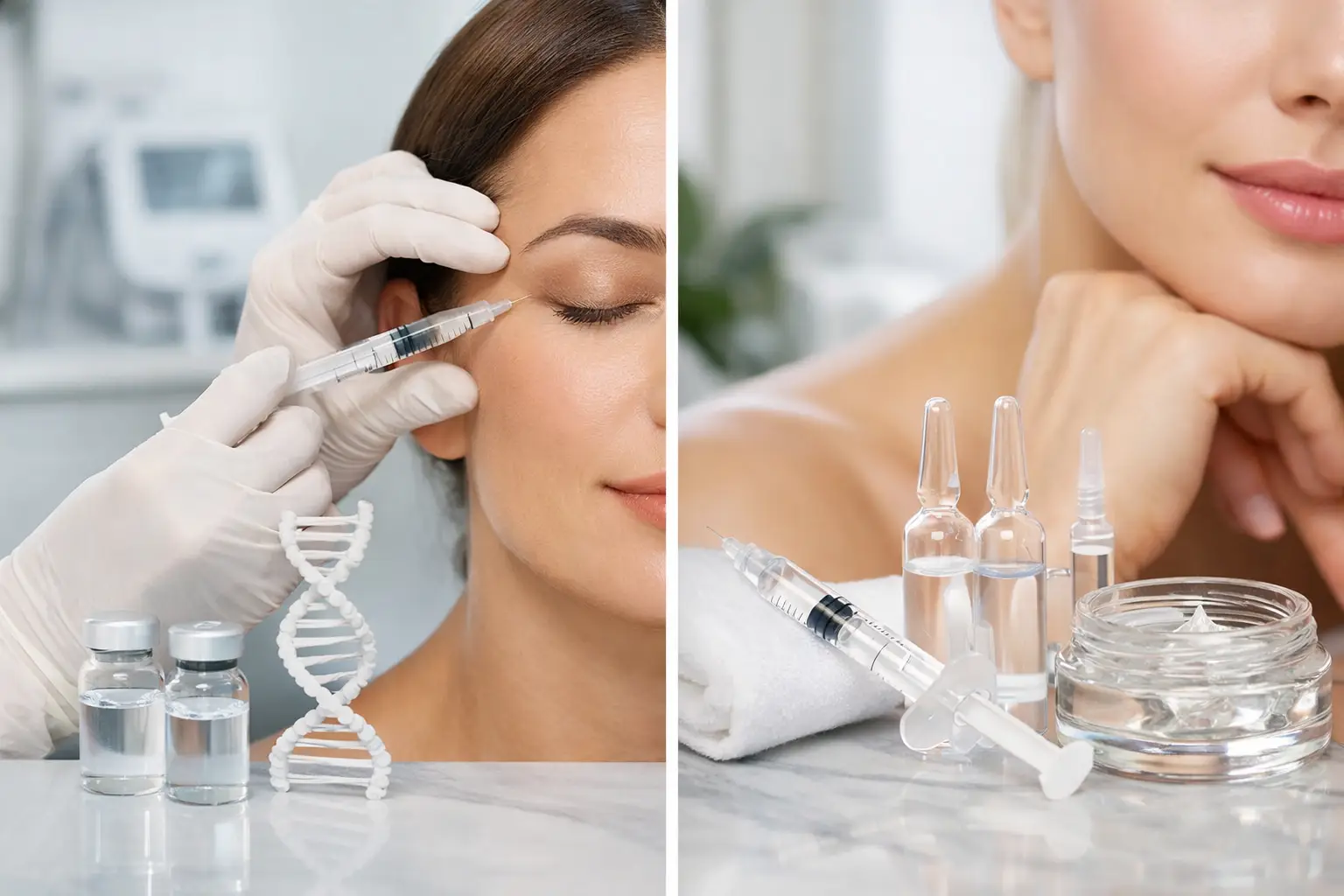
Not every face needs more volume. Quite often, what clients really notice is thinner skin, creasing that lingers, a loss of glow, or a general tiredness that makeup no longer quite disguises. That is usually where the conversation around aesthetics Chalkwell polynucleotides Profhilo fillers becomes more useful than simply asking for a single treatment by name. These treatments do very different jobs, and choosing well matters far more than choosing what is currently popular.
For some people, the right plan is hydration and skin support. For others, it is structure and lift. Many benefit from a staged approach rather than trying to force one product to solve everything. A careful consultation should always come first, because natural-looking results depend on matching the treatment to the concern.
Aesthetics Chalkwell: polynucleotides, Profhilo and fillers
Polynucleotides, Profhilo and dermal fillers are often mentioned together because they all involve injectable treatment, but they are not interchangeable. They sit in different parts of aesthetic medicine.
Polynucleotides are regenerative skin treatments. They are used to support skin quality, improve tissue condition and encourage repair. They are often chosen when the skin looks crepey, dull, fragile or tired, particularly around delicate areas such as the eyes. The aim is not to add volume. The aim is to improve the environment within the skin so it can look healthier and behave more like younger skin.
Profhilo is a skin booster with a very high concentration of hyaluronic acid. It spreads through the tissue to improve hydration, skin laxity and overall texture. Again, it is not a traditional volumising filler. It is better thought of as an injectable treatment for skin quality, especially where the skin has started to feel less firm and less luminous.
Dermal fillers are different. Fillers are used to restore volume, enhance contours and support facial structure. If cheeks have flattened, the chin lacks projection, or folds are forming because support has reduced, filler may be the appropriate option. Used well, filler should look balanced and subtle. Used for the wrong indication, it can look heavy or unnecessary.
What polynucleotides are best for
Polynucleotides are often the most suitable choice when the concern is skin quality rather than shape. Clients describing papery skin under the eyes, fine crinkling on the cheeks, poor healing, or a general loss of freshness may be better suited to regenerative treatment than volume replacement.
They work by supporting fibroblast activity and tissue repair. In simple terms, they help the skin function better. This can make them especially useful for people who are not ready for filler, do not want extra volume, or have an area where puffiness would be undesirable.
The under-eye area is one of the most common examples. If someone has dark circles linked to thin skin, mild hollowness and crepey texture, filler is not always the first answer. In some cases, filler in this area can draw attention to swelling or create a look that is too full. Polynucleotides may offer a more appropriate route because they focus on tissue quality.
That said, they are not an overnight fix. Results build gradually and usually require a course of treatment. Clients who want instant structural change may find them too subtle on their own.
When polynucleotides may be a better choice than filler
If your face still has reasonable volume but the skin itself looks tired, polynucleotides may make more sense. They are also worth discussing if you want prevention and maintenance rather than obvious change. The trade-off is patience. Improvement is progressive, and the end point is fresher skin, not a reshaped face.
Where Profhilo fits in
Profhilo sits somewhere between skincare and structural injectables, although it is much closer to skin treatment than filler. It is particularly helpful for skin that has become dehydrated, less elastic and slightly slack. Clients often describe wanting to look less drawn or less tired without looking altered, and that is exactly where Profhilo can work well.
It is commonly used on the face, neck and sometimes other areas where creasing and laxity have started to show. Rather than creating projection, it improves hydration from within and can give the skin a smoother, more rested appearance.
Profhilo tends to suit clients who are noticing early to moderate signs of ageing, especially if they do not need strong contour correction. It can also complement other treatments. Someone may have filler for structural support and Profhilo for skin quality, because these concerns often exist together.
Profhilo versus polynucleotides
This is where treatment plans need nuance. Profhilo is excellent for widespread hydration and mild laxity. Polynucleotides are often chosen where repair, regeneration and tissue quality are the priority, especially in delicate areas. Neither is simply a substitute for filler.
If the skin looks dull and dehydrated all over, Profhilo may be the more obvious option. If the concern is fragile under-eye skin, fine creasing or skin that needs a more regenerative approach, polynucleotides may be more suitable. In some cases, both can be used at different stages of a broader plan.
When fillers are still the right answer
There are times when skin boosters and regenerative treatments are not enough on their own. If facial ageing is being driven by volume loss or reduced support, filler may be the more accurate treatment.
This could include flattened cheeks, deeper nasolabial folds caused by mid-face descent, loss of jawline definition, or a chin that would benefit from balance and projection. In these cases, adding hydration alone may improve the skin, but it will not restore structure.
A common mistake is trying to treat every concern with filler. Another is avoiding filler altogether because of fear of looking overdone. In reality, the result depends on assessment, product choice, placement and restraint. Well-planned filler should support the face, not dominate it.
The risk of choosing by trend
Treatment trends can make clients feel they should ask for a specific product before they have been assessed. That approach rarely gives the best outcome. Someone requesting filler may actually need skin quality work first. Someone asking for Profhilo may be disappointed if their main issue is significant volume loss. Good aesthetic care is not about saying yes to a product request. It is about explaining what will genuinely help.
How to decide between polynucleotides, Profhilo and fillers
The most useful question is not which treatment is best overall. It is what exactly you are trying to improve.
If you want healthier, stronger-looking skin with better texture, polynucleotides may be the best fit. If you want hydrated, fresher-looking skin with mild tightening and improved glow, Profhilo may be more suitable. If you want contour, lift, balance or restored support, filler may be required.
Age is only one factor. Skin quality, facial anatomy, lifestyle, previous treatment history and your appetite for gradual versus immediate results all matter. A person in their thirties may benefit from Profhilo or polynucleotides as a preventative step, while another of the same age may need filler in a specific area because of natural anatomy. Equally, a client in their fifties may prefer a subtle regenerative plan over volumising treatment.
This is also where honest consultation matters. The best treatment is not always the most expensive or the most dramatic. It is the one that addresses the real issue while respecting the way you want to look.
Why a tailored plan usually works best
Many of the most refined results come from combining treatments thoughtfully rather than relying on one alone. Skin ageing is rarely just one thing. There may be dehydration, collagen loss, changes in elasticity and structural volume loss happening at the same time.
A personalised approach might start with polynucleotides to improve delicate skin quality, then use Profhilo to support hydration and firmness more broadly, and finally add a small amount of filler only where structure is genuinely needed. That sort of layering tends to look more natural because it treats the face in a balanced way.
For clients who value privacy, convenience and clinical guidance, mobile treatment can make that process feel more comfortable. London Essex Aesthetics provides consultation-led care in your own setting, which allows time for proper discussion, careful planning and aftercare without the rushed feel some clients worry about.
What to expect from consultation and aftercare
Before any injectable treatment, a proper consultation should cover your medical history, current concerns, treatment goals and suitability. Photographs may be taken for assessment, and you should be told clearly what the treatment can and cannot achieve.
Aftercare varies slightly depending on the product used, but mild redness, swelling or tenderness can happen with all three options. Most clients return to normal activity quickly, although timing around important events still matters. If you have a wedding, holiday or major work commitment approaching, it is sensible to plan ahead rather than book at the last minute.
Perhaps the most reassuring point is this: you do not need to know the answer before you book. You do not need to arrive having chosen between polynucleotides, Profhilo and filler with complete certainty. The better approach is to be clear about what you see in the mirror, what feels different about your skin, and how subtle you want the result to be. From there, the right treatment plan becomes much easier to build.