
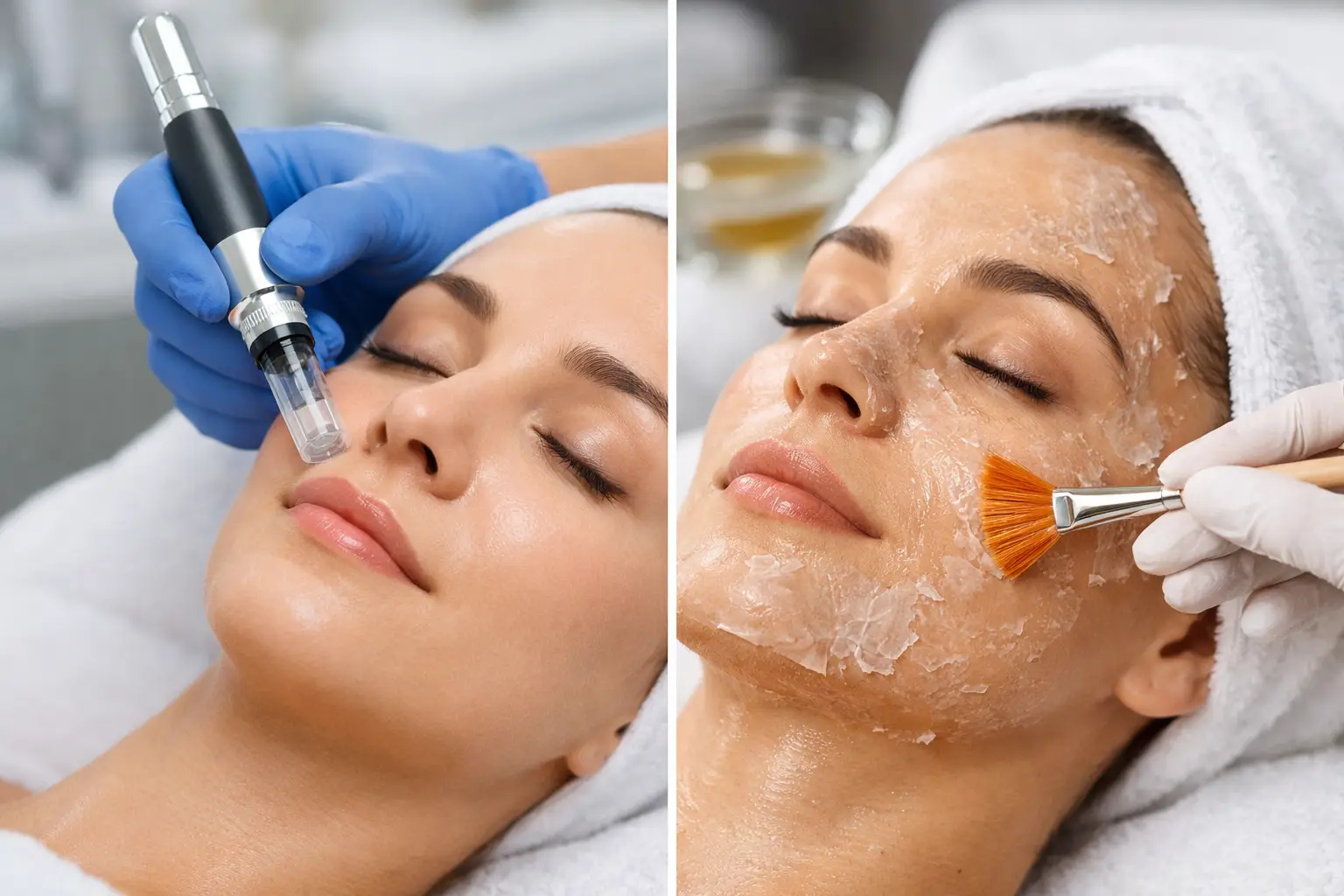
If you are weighing up microneedling vs chemical peels at London Essex Aesthetics, the right choice usually comes down to one thing: what is bothering you most when you look in the mirror. Texture, early scarring and tired-looking skin often respond differently from pigmentation, congestion or uneven tone. Both treatments can improve skin quality, but they do not work in the same way and they are not interchangeable.
That is why a consultation matters. A treatment that suits your friend, or something you have seen online, may not be the best option for your skin history, your goals or the amount of downtime you are comfortable with. Good aesthetic care is rarely about choosing the most popular treatment. It is about choosing the right one for you.
Microneedling vs chemical peels at London Essex Aesthetics
Microneedling creates controlled micro-injuries in the skin using fine needles. This encourages the skin’s natural repair response and supports collagen and elastin production over time. It is often chosen for concerns linked to texture and skin quality, rather than heavy surface exfoliation.
Chemical peels work differently. A carefully selected solution is applied to the skin to exfoliate and accelerate cell turnover. Depending on the peel used, this can target dullness, congestion, pigmentation, uneven tone and some signs of ageing. The strength and depth of the peel are tailored to the individual rather than treated as a one-size-fits-all facial.
Both treatments can be valuable. The question is not which is better overall, but which is more appropriate for your concern, skin type and lifestyle.
How microneedling works
Microneedling is often a strong option when the skin needs stimulation and renewal from within. The tiny channels created during treatment trigger a wound-healing response, which can improve firmness, refine texture and support smoother-looking skin over a course of sessions.
It is commonly recommended for enlarged pores, mild acne scarring, fine lines and skin that feels less resilient than it once did. Clients also like it for general rejuvenation when they want fresher skin without changing their natural appearance.
Results tend to build gradually. You may notice some improvement in glow and texture fairly quickly, but collagen remodelling takes time. That makes microneedling a treatment for people who are happy to think a little longer term.
Who microneedling tends to suit best
Microneedling often suits clients who want to improve skin texture, early signs of ageing or post-acne marks. It can be especially useful when the concern sits below the surface rather than simply on top of it. If your skin feels rough, marked or slightly crepey, microneedling may offer more than a superficial exfoliation.
It can also be appealing if you prefer a treatment plan that aims for progressive, natural-looking improvement. The goal is usually healthier, stronger-looking skin, not a dramatic overnight change.
How chemical peels work
Chemical peels focus more on removing damaged outer layers and encouraging fresher cells to come to the surface. There are different peel formulations, and this matters. A light peel for dullness and congestion is very different from a more intensive approach for pigmentation or photoageing.
For many people, peels are helpful when the skin looks tired, uneven or breakout-prone. They can brighten the complexion, improve clarity and help products work more effectively afterwards. Some are also chosen to target blemish-prone skin and post-inflammatory marks.
The appeal of chemical peels is that they can produce visible brightening relatively quickly. That said, stronger does not always mean better. Over-treating the skin barrier is never the aim, particularly if your skin is sensitive or reactive.
Who chemical peels tend to suit best
Chemical peels often suit clients dealing with dullness, pigmentation, uneven tone, mild blemishes or a rough, congested surface. If your main concern is that your skin looks flat, patchy or tired, a peel may be the more direct route.
They can also be useful for clients who want noticeable freshness with a shorter treatment time. However, the best peel and the right intensity depend on your skin tone, sensitivity, previous treatments and aftercare habits.
Microneedling vs chemical peels for common concerns
When clients are deciding between microneedling and peels, it helps to match the treatment to the concern rather than the trend.
For acne scarring and textural irregularities, microneedling is often the stronger option. It supports dermal remodelling, which is important when the issue involves unevenness beneath the skin surface. A peel may improve overall brightness around the area, but it may not address the structural aspect in the same way.
For pigmentation and sun damage, chemical peels are often more suitable. They can help disperse uneven surface pigment and improve overall tone. That said, pigmentation can be complex, and not every peel is suitable for every skin type. In some cases, a cautious plan is essential to avoid irritation or rebound pigmentation.
For fine lines and mild skin ageing, both can help. Microneedling is usually chosen when collagen stimulation is the priority. A peel may be selected when the skin also looks dull or uneven and would benefit from resurfacing.
For active congestion and breakout-prone skin, peels are frequently preferred. They can help exfoliate, clear pore build-up and improve clarity. Microneedling is not always the first choice for inflamed, active acne.
Downtime, comfort and practicality
Downtime often influences the decision as much as the skin concern itself. Microneedling usually leaves the skin red for a day or two, sometimes a little longer depending on intensity. The skin may feel warm, tight or slightly rough while it settles.
Chemical peels vary more. A very light peel may involve minimal visible downtime, while a stronger peel can lead to flaking, dryness and a more obvious recovery period. Not everyone actually peels dramatically, despite the name, but some level of shedding is possible.
Comfort differs too. Microneedling can feel prickly and intense in some areas, though it is generally well tolerated. Peels may create tingling, warmth or stinging during application. Neither should feel uncontrolled or unsafe when performed properly, but neither is best approached casually.
For busy clients, this is often a practical question. If you have work events, family commitments or limited flexibility, timing matters. A treatment plan should fit around real life, not the other way round.
Which treatment is better for sensitive skin?
This is where the answer is often, it depends. Sensitive skin is not one single category. Some people react to acids but tolerate microneedling well. Others have an impaired barrier and may need both treatments delayed until the skin is calmer and healthier.
If your skin is reactive, dry or prone to redness, the treatment choice needs careful assessment. The condition of your barrier, your current skincare, any history of rosacea-like symptoms and your previous response to treatments all matter. Pushing ahead with the wrong treatment can leave skin more inflamed rather than improved.
A measured, consultation-led approach is especially important here. Sometimes the most responsible advice is to prepare the skin first and treat later.
Can you have both microneedling and chemical peels?
Yes, in some cases both can be used within a broader skin plan, but not at the same time and not without proper spacing. They place different demands on the skin, so treatment sequencing matters.
For example, one client might begin with peels to improve congestion and pigmentation, then move on to microneedling for texture and collagen support. Another might use microneedling as the core treatment and add a peel at a different stage for brightness. The order depends on your goals, skin tolerance and how your skin responds.
This is one reason personalised care matters more than picking a treatment from a menu. Skin rarely presents with only one issue.
How to choose between microneedling and peels
If your main concern is rough texture, early scarring or loss of firmness, microneedling is often the more useful starting point. If your skin looks dull, uneven, pigmented or congested, a chemical peel may be the clearer first step.
The detail behind that choice is what makes the difference. Skin tone, sensitivity, active breakouts, recent sun exposure, medical history and aftercare commitment all influence what is safe and sensible. At London Essex Aesthetics, that decision is guided by consultation rather than guesswork, with treatment selected around the individual and not just the concern on paper.
The best treatment is the one that respects your skin, fits your routine and moves you towards results that still look like you – just healthier, fresher and more balanced. If you are unsure, that is not a problem. It simply means your next step should be expert advice rather than a rushed decision.