
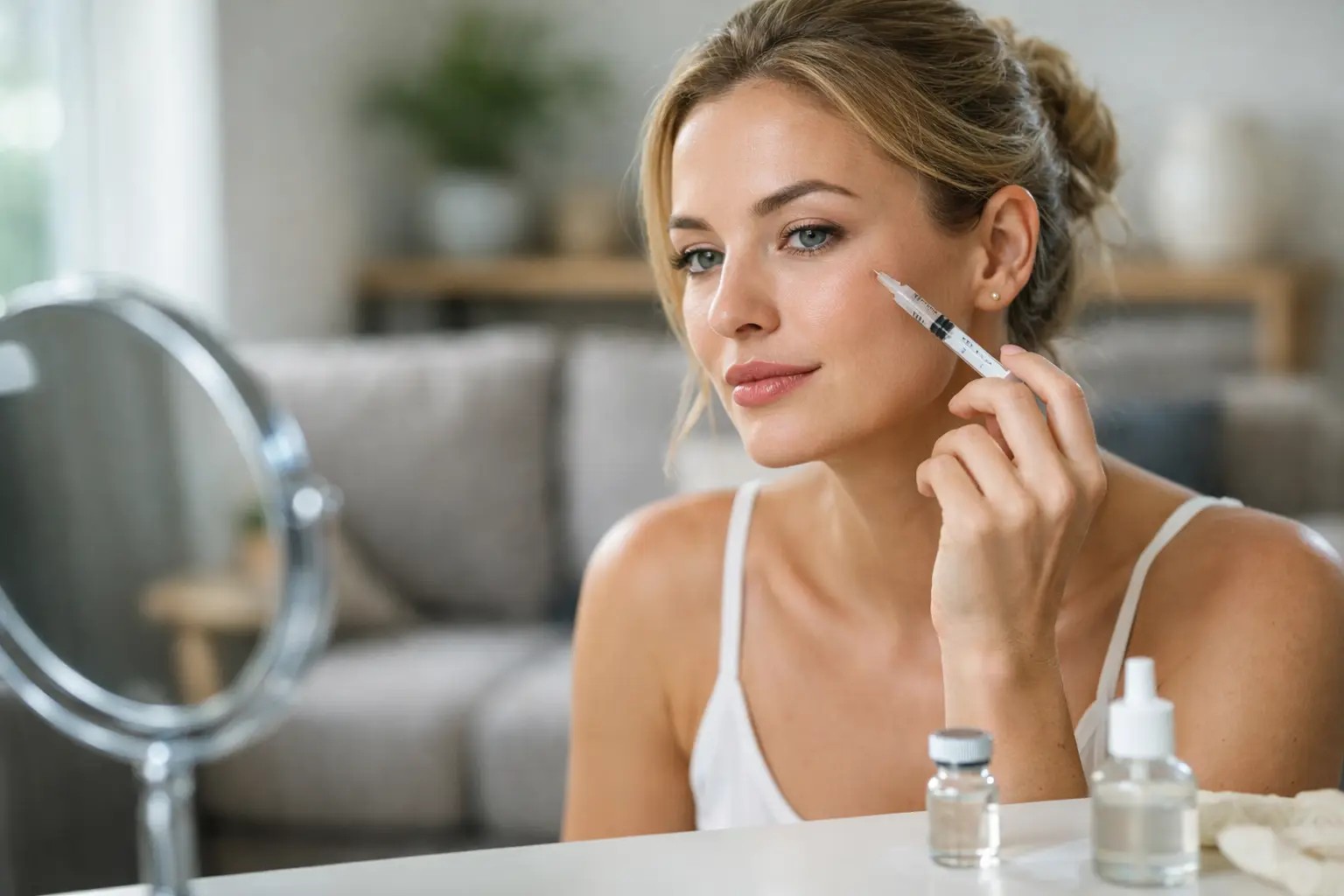
When time is tight and privacy matters, interest in aesthetics Stoke Newington polynucleotides fillers at home tends to come from a practical place rather than a passing trend. People want expert treatment without the extra journey, waiting room or rushed feeling that can come with fitting appointments around work, childcare or everyday life. The key question is not whether treatment at home sounds convenient. It is whether it can still be done properly, safely and with results that look refined.
For the right client, the answer can be yes. But it depends on the treatment, the injector, the consultation process and whether home treatment is being offered with the same clinical standards you would expect in a well-run medical aesthetics setting.
What aesthetics at home should actually involve
Home aesthetics should never mean informal aesthetics. That distinction matters. A professional mobile appointment still needs a full consultation, a review of medical history, informed consent, clear treatment planning, appropriate hygiene standards and realistic aftercare advice.
That is especially true with injectables and regenerative treatments. Fillers and polynucleotides do very different jobs, and one of the most common mistakes clients make is assuming they are interchangeable because both are used to improve the face. They are not. One is primarily about structure and support. The other is about skin quality and tissue repair.
In practice, a good practitioner will usually slow the decision down rather than speed it up. If your concern is tired-looking under-eyes, early laxity, dull skin or fine crepey texture, polynucleotides may be more appropriate than filler. If the issue is actual volume loss, contour change or deeper structural support, filler may have a role. Sometimes the most honest answer is that you need neither yet.
Fillers at home in Stoke Newington – what they are best for
Dermal fillers are gel-based injectable treatments used to restore volume, improve facial balance and soften certain static lines. In a home setting, they can be a very suitable option when the treatment plan is straightforward, the client has been properly assessed and the environment allows for safe preparation and aftercare discussion.
Common reasons clients consider fillers include flattening in the cheeks, loss of definition through the jawline, downturn at the mouth corners, thinning lips or folds that have become more noticeable with age. Used well, filler should not make the face look done. It should make features look fresher, better supported and more in proportion.
That said, filler is not a treatment to use simply because something looks tired. It works best where there is a genuine structural deficit. If the skin itself is thin, creased, inflamed or dehydrated, adding volume can sometimes miss the real issue. This is where a consultation-led approach matters. More product is not the same as a better outcome.
At-home filler appointments can feel more relaxed for clients who prefer discretion. There is no travelling immediately afterwards, which many people appreciate, particularly if there is some temporary redness or swelling. The trade-off is that the practitioner must be particularly organised, with careful setup, suitable lighting, strong infection control and a clear emergency protocol. Convenience should never replace competence.
Polynucleotides at home – when skin quality is the priority
If fillers are mainly about restoring or refining shape, polynucleotides are more about improving the quality of the tissue itself. They are injectable regenerative treatments designed to support skin repair, hydration and overall resilience. Clients often describe wanting to look less tired, less creased or more refreshed without looking fuller. That is often the conversation where polynucleotides become relevant.
They are commonly used around delicate areas such as the under-eyes, as well as the face, neck and sometimes hands, depending on the treatment plan. They can be a sensible option when skin appears dull, fragile or mildly lax, and where the goal is subtle improvement over time rather than an immediate volumising result.
This is worth being honest about: polynucleotides are not a quick fix. They tend to work gradually, and the best results often come through a course of treatment rather than a single appointment. For some clients, that slower build is exactly what they want. For others, particularly those expecting an instant visible change, filler may sound more appealing. Neither is better in every case. They serve different purposes.
In a home appointment, polynucleotides can work very well because the treatment itself is usually well suited to a calm, private setting. Clients can settle afterwards without heading straight onto public transport or back into the office. That said, some temporary swelling, especially in delicate areas, should be expected and discussed beforehand.
Aesthetics Stoke Newington polynucleotides fillers at home – how to choose
The most useful way to choose between these treatments is to focus on the concern, not the product name. Clients often arrive asking for filler because it is familiar, when what they really want is brighter skin, better texture and less creasing. Others ask for skin treatments when the issue is clear volume loss that skincare and regenerative injectables will not meaningfully correct.
A careful assessment usually looks at four things: skin quality, facial volume, movement and overall balance. If your face still has good structure but the skin has lost bounce, polynucleotides may be the better starting point. If features have become less supported, filler may make more sense. In some cases, a staged plan works best, beginning with skin health and then reviewing whether structural treatment is still needed.
This is also where natural-looking results are protected. Treating too much at once, or treating the wrong layer of the problem, often creates the overdone look clients are trying to avoid. A measured plan nearly always ages better than a rushed one.
What a safe home appointment should feel like
A professional home aesthetics visit should feel calm and clear, not casual. You should know what treatment is being proposed, why it is suitable, what the likely result is, what the risks are and what the aftercare involves. You should also feel able to say no.
Before treatment, there should be a proper medical consultation, including medications, allergies, previous treatments, relevant health conditions and any history of cold sores where applicable. Photographs may be taken for clinical records. The practitioner should explain likely side effects such as redness, swelling, tenderness and bruising, along with the rarer but more serious complications that must always be discussed with injectable treatments.
The environment itself matters too. A clean, well-lit area with enough space to work is not a luxury. It is part of safe treatment. Clients sometimes assume home aesthetics is simply someone arriving with a bag and getting started. It should be much more structured than that.
Aftercare should be just as clear. You need to know what is normal, what is not, how long swelling may last and when to get in touch. Reassurance is important, but so is availability if something needs review.
Who is and is not a good candidate
At-home treatment is often ideal for busy professionals, parents, clients who value discretion and anyone who feels more comfortable being treated in familiar surroundings. It can remove practical barriers without reducing the quality of care, provided the clinician is experienced and the treatment is appropriate for a mobile service.
It may be less suitable if your case is medically complex, if you are unsure what treatment you want and need a broader assessment over time, or if the home environment cannot support safe setup and recovery. It may also be sensible to postpone treatment if there is active skin irritation, infection, significant inflammation or an event too close to the appointment date.
The best practitioners do not treat every enquiry as a booking. Sometimes the right advice is to wait, adjust the plan or choose a different treatment entirely. That kind of honesty usually leads to better results.
Why personalised treatment matters more than the setting
Whether treatment happens in a clinic or at home, the result still comes back to judgement. Good aesthetics is not about following a menu. It is about matching the treatment to the face, the skin and the client’s comfort with change.
That is particularly true with polynucleotides and fillers because they can complement each other, but they should not be used as generic solutions. One person may need support and definition. Another may need skin repair and hydration. Another may benefit more from doing nothing immediately and reviewing after a few months.
For clients in Stoke Newington and across London and Essex, home treatment can be an excellent option when it is delivered with proper clinical care, careful consultation and realistic expectations. The setting may be more comfortable, but the standards should remain high.
The right treatment is the one that suits your face, your concerns and your pace – and a good practitioner will always be more interested in getting that right than in selling you the most obvious option.