
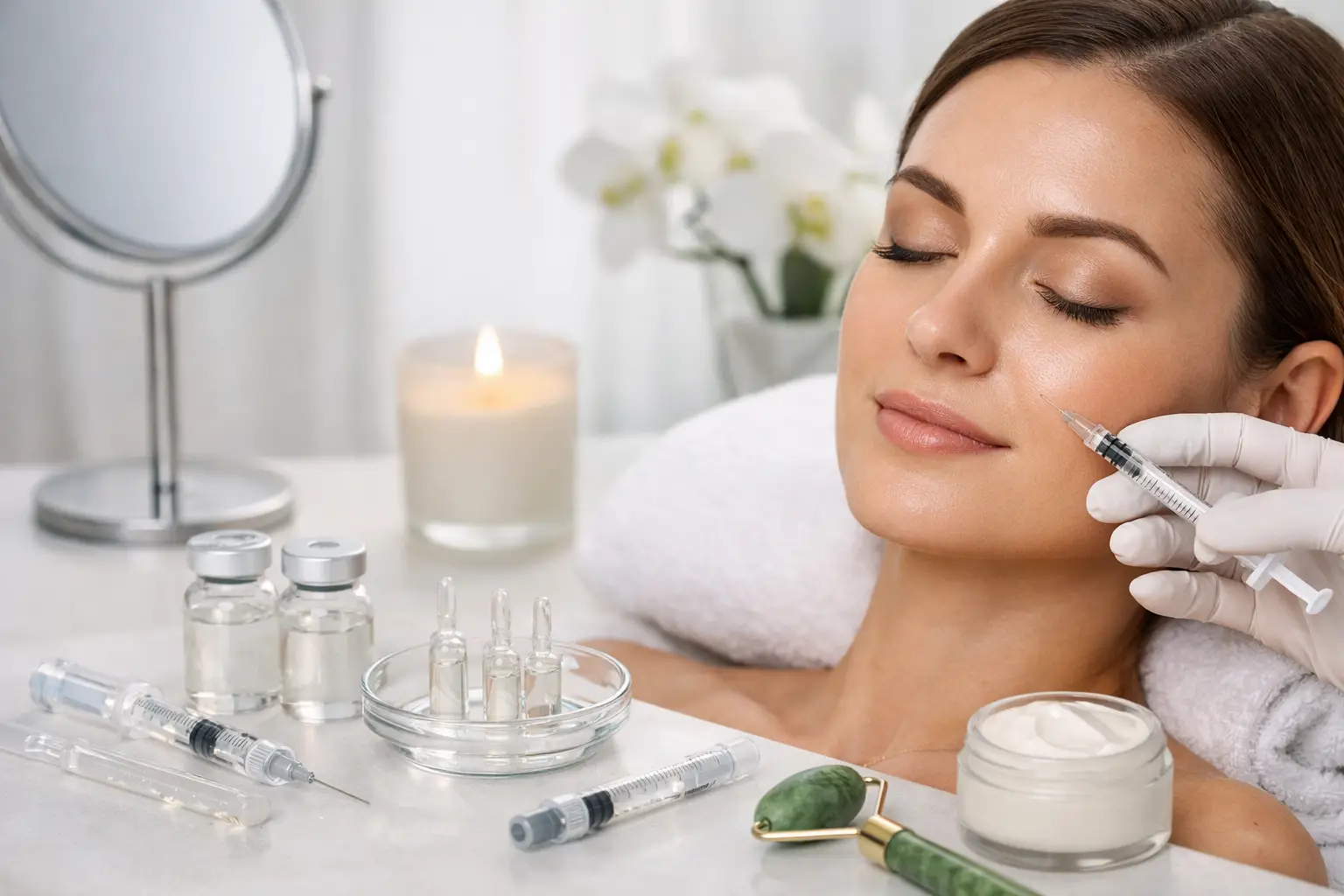
A busy diary, a long commute and the thought of sitting in a waiting room can be enough to delay treatment for months. For many clients, aesthetics Loughton polynucleotides fillers at home is not about luxury for its own sake. It is about having access to professional, carefully planned treatment in a setting that feels private, calm and easier to manage.
Home appointments can work extremely well for advanced aesthetic treatments, but only when the service is structured properly. The key question is not whether treatment happens in a clinic or at home. It is whether the consultation, assessment, safety protocols and aftercare meet the same professional standard you would expect anywhere else.
Why clients ask for aesthetics Loughton polynucleotides fillers at home
The appeal is easy to understand. If you work long hours, have childcare commitments or simply prefer discretion, a mobile appointment removes a practical barrier. You can be assessed and treated in familiar surroundings, without building extra travel and waiting time into the day.
That convenience matters, but it should never be the only selling point. Good aesthetic treatment is still medical in nature. Even when the aim is subtle enhancement, there needs to be a clear understanding of your skin quality, facial structure, medical history and treatment goals. A home setting can absolutely support that process, provided the practitioner is experienced, prepared and selective about what is suitable to perform safely outside a fixed clinic.
For clients in areas such as Loughton, this approach often suits those who want refined results without making treatment feel like a major event. It can feel more discreet, more personal and less rushed. That tends to support better decision-making, especially when you are choosing between regenerative skin treatments and volume-restoring injectables.
Polynucleotides or fillers – what is the difference?
Polynucleotides and dermal fillers are sometimes mentioned together because both can improve the face, but they do very different jobs.
What polynucleotides are designed to do
Polynucleotides are regenerative injectables used to support skin quality rather than add volume in the way filler does. They work by encouraging tissue repair and improving hydration, elasticity and overall skin condition over time. They are often chosen for crepey, tired or delicate skin, including under the eyes, around the face, neck and sometimes the scalp depending on the treatment plan.
This is usually the right direction if your main concern is not that you look hollow, but that your skin looks thinner, duller or less resilient than it used to. The result is gradual. You are not trying to walk away looking noticeably different that afternoon. You are investing in healthier-looking skin over a course of treatment.
What fillers are designed to do
Dermal fillers restore structure, support and volume. They can be used to soften deeper folds, improve contour, enhance lips or rebalance areas where age-related volume loss has changed the shape of the face. When carried out well, filler should not look obvious. It should simply make the face appear fresher and more supported.
Filler is often the better option when the issue is shape or loss of definition rather than skin quality alone. If cheeks have flattened, the chin lacks support or folds are forming because underlying volume has reduced, a regenerative treatment on its own may not give enough visible change.
When the answer is not either-or
In practice, it is not always a choice between one and the other. Some clients benefit from both, but at different stages and in different areas. For example, filler may restore structure through the mid-face, while polynucleotides improve crepey skin under the eyes. The right plan depends on what is causing the concern, not what treatment is currently popular.
Is at-home treatment actually safe?
It can be, but only with the right practitioner and the right setup. This is where honesty matters.
A professional mobile aesthetics service should bring more than products and a treatment tray. It should include proper consultation, consent, hygiene measures, sharps management, emergency protocols, medical screening and clear aftercare. If any of that feels vague, rushed or improvised, that is a reason to pause.
Not every client is suitable for treatment on the day, and not every concern should be treated at home. A trustworthy practitioner will say so. Sometimes the safest course is to delay treatment, adjust the plan or refer elsewhere. That is not a poor service experience. It is good clinical judgement.
The home environment also needs to be appropriate. There should be enough clean, well-lit space to assess and treat you properly. Privacy helps, but so does practicality. A consultation carried out carefully at home can feel more personal than one done in a busy clinic, yet it should still be structured and professional from start to finish.
What to expect from a home consultation
The best appointments do not begin with a syringe. They begin with questions.
You should expect a discussion about your medical history, allergies, previous treatments, areas of concern and what sort of result you want. This is also the point where expectations are managed. If you want a natural result, that should be reflected in the treatment plan, the amount used and whether treatment is built gradually.
With polynucleotides, you should be told that results develop over a series of sessions and improve progressively. With filler, you should understand where product is being placed, why that area has been selected and what level of correction is realistic in one appointment. Good treatment is rarely about doing the maximum possible in one sitting.
Photographs may be advised as part of proper assessment and record-keeping. That can feel formal in a home setting, but it is part of safe, accountable practice.
Aesthetics Loughton polynucleotides fillers at home – who suits it best?
This type of service tends to suit clients who value discretion, flexibility and a consultation-led approach. It is especially useful for people who want advanced treatment without the inconvenience of travelling into a clinic around work or family life.
It can be a very good fit if you already know you prefer subtle, medically guided results over trend-led changes. Polynucleotides often appeal to clients who want to improve skin quality in a measured way. Fillers tend to suit those who have specific structural concerns and want careful restoration rather than obvious augmentation.
It may be less suitable if you are unsure what you want and are hoping to decide quickly on the day based on social media references or impulse. The most successful outcomes usually come from a considered plan, not a rushed decision.
Aftercare matters just as much at home
One of the advantages of a home visit is that aftercare advice can feel more relevant because it is given in the environment where you will actually recover. That said, the guidance itself should be no less thorough than in clinic.
After polynucleotides, you may have small bumps, mild swelling or tenderness for a short period. After filler, there may be swelling, redness, bruising and temporary asymmetry while the area settles. You should know what is normal, what to avoid and when to get back in touch.
This is particularly important with injectables. Reassurance is part of good care, but so is clarity. You should leave the appointment understanding the expected downtime, likely review timeline and the signs that need prompt attention. The setting may be domestic, but the aftercare should remain clinical and precise.
Choosing quality over convenience alone
The growing interest in mobile aesthetics is understandable, and for the right client it offers a genuinely valuable way to access treatment. Still, convenience should be the benefit that sits alongside quality, not the thing that replaces it.
If you are considering polynucleotides or fillers at home, look for a practitioner who explains the differences clearly, assesses your face and skin properly, and is comfortable saying no when needed. That is usually a strong sign you are in safe hands.
The right treatment plan should feel considered rather than persuasive. When it does, having professional care in your own home can be not only more convenient, but more comfortable, more discreet and easier to fit into real life.